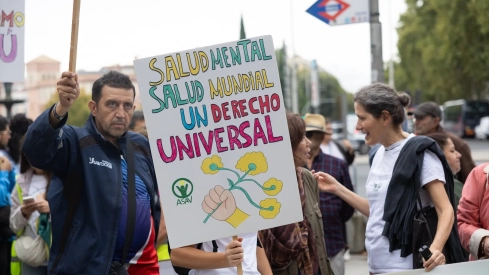
Aldeas Infantiles SOS has demanded this Thursday that the right to mental health for children and adolescents translates into public care that is “accessible, specialized, and continuous,” coinciding with the commemoration of World Mental Health Day, which is celebrated on Saturday, October 10.
The organization has warned that the insufficiency of resources hinders early detection and support for those who need help, while widening inequality among families, especially in cases of minors who have lost parental care or are at risk of doing so.
More prevention, early support, and continuity in treatments
According to the NGO, it is “fundamental” to receive help when the first signs of distress appear and to maintain it as long as necessary, in order to protect emotional well-being during childhood and adolescence.
In this vein, it has called for improved prevention and guaranteed specialized support for children and adolescents, warning that mental health problems that are not adequately addressed can hinder learning, personal relationships, and, later on, the possibilities of leading an independent life.
Criticism of the lack of professionals and resources in the public system
Aldeas Infantiles SOS has warned of the “insufficiency” of professionals and specialized services in the public health system, a deficiency that, in its opinion, compromises early detection and the continuity of treatments during childhood and adolescence.
The entity argues that primary care needs “more time and tools” to recognize the first symptoms and facilitate referral to specialized services. Furthermore, it has pointed out that child and adolescent mental health units must have sufficient professionals, adequate spaces, and the capacity to offer psychotherapeutic interventions with the necessary frequency and duration.
Care cannot depend on income or place of residence
The organization has warned that the lack of public resources exacerbates inequality and compromises the right to receive psychological care for children and adolescents growing up in lower-income families.
In its message, it has pointed out that economic difficulties can generate situations of prolonged stress that affect well-being and increase the need for support, so child mental health care “cannot depend on family income or place of residence.”
Specialized teams in child trauma and institutional coordination
On the other hand, Aldeas Infantiles SOS has considered it “essential” to have specialized teams in child trauma and in the consequences of abuse for children and adolescents who have lost parental care or are at risk of doing so.
The NGO has also requested that the measures for children and adolescents included in the Mental Health Action Plan 2025-2027 be materialized with “sufficient and sustained” funding, including training and support for primary care teams, effective coordination between health, education, and social services, and the promotion of the regulation of the specialty in Clinical Psychology of Childhood and Adolescence.
More than 50 psychologists in different autonomous communities
The entity has explained that it has more than 50 psychologists in different autonomous communities of Spain, who offer individual and family care and therapy, and work in coordination with social services, educational centers, and health professionals.
As it has detailed, “therapy helps them process lived experiences and recover their well-being, while family therapy promotes relationships and care within the home.”
