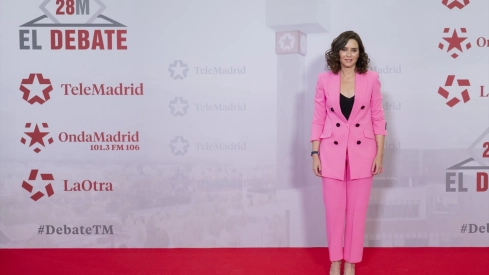
The PSOE has filed two complaints with the Central Electoral Board against Radio Televisión de Madrid for an alleged violation of the principles of pluralism, equality, proportionality, and informational neutrality during the electoral period. The documents, to which 'ElConstitucional.es' has had access, point to the broadcasts on October 12 of the programs Hablamos de Madrid, presented by Carlos Cuesta, and El Análisis: Diario de la Noche, directed and presented by Antonio Javier Rodríguez Naranjo.
Both complaints are dated October 14 and argue that Telemadrid has maintained, "if not increased," an unbalanced coverage since the election call. Thus, the documents denounce "a bias favorable to the theses of the Popular Party and openly contrary, sometimes even aggressive, towards the PSOE." They also question the selection of commentators and the tone of interventions in opinion and analysis spaces.
For the PSOE spokesperson in the Madrid Assembly, Mar Espinar, "it is intolerable that Telemadrid, the public television of all, is not an objective media outlet and has become the loudspeaker for insults and hatred against the president and the government of Spain. Madrileños deserve a television where respect and plurality prevail."
Ayuso and Almeida with a voice; PSOE representatives, unidentified
The complaint about Hablamos de Madrid begins with the treatment of the October 12 parade. According to the document, the program broadcast a two-minute summary that expressly identified PP leaders such as Alberto Núñez Feijóo and Ester Muñoz and included statements by Isabel Díaz Ayuso and José Luis Martínez-Almeida.
In these interventions, the document states, both expressed their conviction that it would be Pedro Sánchez's last parade as president, a reference that the complainants link to the general elections.
On the contrary, the PSOE argues that its representatives appeared only in images, without mentioning their names. Furthermore, it considers the allusions to Sánchez to be derogatory for reproducing what the document describes as "the hoax that he stayed in the car to avoid the public's boos."
Cuesta's statements about Sánchez's pacts
The socialists also point out several interventions by the presenter. Among them, they reproduce these words from Carlos Cuesta addressed to a panelist: “Explain this to us. When you are going to celebrate Spain's day, you have to be careful because you have made agreements with parties that want the destruction of Spain.”
The complaint states that, in that same segment, he added: “Pedro Sánchez was fully aware that when he forged these alliances, they were alliances with people who wanted to insult Spain and not celebrate Spain. And then you complain that people are angry and say certain things to you? When you are fully aware that the alliances you have established are alliances against the interests of Spain”.
For the PSOE, these expressions exceed information about current events and constitute their own political judgments, formulated in disparaging terms against the President of the Government.
The document also questions Cuesta's comments when analyzing Sánchez's video about the October 12 holiday. According to the transcript included in the complaint, the presenter stated: “By the way, he gets to mention the issue of housing. With the mess that's going on, that everyone is throwing it in his face and the Government still hasn't given a figure for social housing built. He promised 182,000, on some occasions. Then he promised another 100,000. We no longer know if they accumulated or not. What we do know is that they are not there. He has highlighted it in what we build together, well, it won't be housing.”
The complainants place these statements, along with the treatment of the parade and references to the Government's partners, within the informative line they reproach the public channel for.
Naranjo and the accusations of “manufacturing voters here”
The second complaint focuses on El Análisis: Diario de la Noche and its coverage of the Supreme Court's decision to maintain the suspension of the right to vote for those naturalized through the so-called grandchildren's law.
The PSOE reproduces the opening of the program, in which Naranjo maintained: “The Supreme Court has put an end to Pedro Sánchez's attempt to inflate the electoral roll by giving away Spanish ID cards to hundreds of thousands of people who never tried, until that moment, to obtain nationality. But of course, it occurred to them when the Government's fix was perpetrated, and they achieved it, mind you, with the paperwork commissioned, for example, by this Government from dictatorial regimes like Cuba.”
It also includes another intervention in which he stated that "it is a real embarrassment and a real scandal how voters have been tried to be manufactured here by giving them nationality and harming those who do deserve that nationality."
Socialists consider that these expressions contain a political bias and relate them to Feijóo's statements about a reform of the Civil Code that "does not give away nationalities." According to them, this coincidence reinforces their accusation of lack of neutrality.
The PSOE recalls an electoral precedent against Telemadrid
The complaint about Cuesta's program incorporates a precedent that it considers relevant. As stated, in Agreement 137/2024, of May 9, the Central Electoral Board already found a violation of informational neutrality due to an objectively derogatory expression by Telemadrid towards the President of the Government.
The document states that that agreement ordered the initiation of a sanctioning procedure against those responsible, urged the withdrawal of the expressions, and reiterated that the corporation should refrain from using others of that nature.
Furthermore, the PSOE invokes electoral doctrine to argue that the interventions of public media presenters cannot be considered personal opinions detached from the channel, but rather an expression of its editorial line.
What the two complaints request
In both documents, the PSOE demands that it be declared that the denounced programs have violated political and social pluralism, equality, proportionality, and informational neutrality.
It also asks that the governing bodies of Radio Televisión de Madrid be required to adopt measures that guarantee these principles in all platforms and programs of the public medium.
The complaints are based on article 66 of electoral legislation and Instruction 4/2011 of the Central Electoral Board. Subsidiarily, they request that the proceedings be referred to the Provincial Electoral Board of Madrid if the Central Board considers that it is up to that body to resolve them.
The documents contain the accusations and requests of the PSOE, not a resolution on the denounced broadcasts.
