The PSOE of Madrid has rejected incorporating into its housing proposal in the Assembly a measure from Más Madrid to raise to 20% the tax that those who buy a third home or more in the region would pay. The initiative sought to make the accumulation of properties fiscally more expensive and was debated this Thursday in the regional Parliament.
The proposal came in the form of an amendment to a non-legislative motion presented by the socialists themselves. Its text also proposed tightening the taxation of certain real estate operations, although without extending the 20% rate in the same way to those who acquired a third home or successive ones.
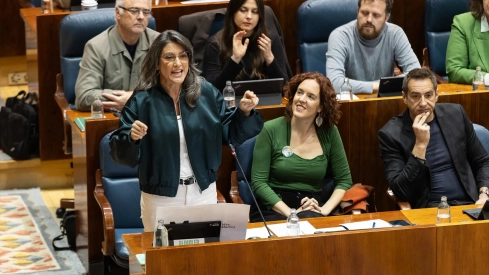
The difference appeared in a debate in which both parties demanded more measures from Isabel Díaz Ayuso's Government against the housing crisis. Más Madrid deputy Jorge Moruno defended that the tax should serve to distinguish between those who buy a home to live in and those who accumulate properties.
The tax referred to in the proposal is the Property Transfer Tax (ITP), which is paid, among other operations, when buying a second-hand home. In the Community of Madrid, a general rate of 6% is applied, although there are bonuses and reduced rates for certain buyers. New housing usually pays VAT.
With a taxable base of 300,000 euros, for example, the payment would go from 18,000 euros with the current general rate to 60,000 euros with the 20% proposed by Más Madrid. The difference would be 42,000 euros. For the real calculation of the tax, the base corresponding to each operation would have to be taken into account.
Two fiscal proposals against housing
The socialist initiative proposed raising the ITP from 2% to 6% that is applied, under certain conditions, to purchases made by real estate companies. It also proposed rates of between 10% and 20% for certain acquisitions of multiple homes, complete buildings, or operations by large holders, depending on the characteristics of each purchase.
In addition, the PSOE defended a reduced rate of 3% for the purchase of a first habitual home, subject to income, property value, and residency requirements. Its proposal foresaw allocating the additional income from the reform to public housing policies.
Más Madrid proposed an alternative for that first purchase, with a rate of 2% for homes up to 450,000 euros and 6% above that amount. The socialists also did not accept that modification. Moruno's party proposed exceptions to the 20% tax for cooperatives and entities dedicated to promoting affordable housing for social purposes.
During the debate, socialist deputy Fernando Fernández Lara explained that his group accepted two of Más Madrid's four amendments. Regarding the other two, he suggested that they could be negotiated in the future. For his part, Moruno celebrated that fiscal progressivity and measures against housing accumulation were gaining ground in the parliamentary debate, although he demanded greater intensity in advancing.
There was an agreement to incorporate into the socialist initiative a reference to the state decree that provides for successive extensions of rental contracts. The norm contemplates periods of five years, or seven if the landlord is a company, with conditions and exceptions. Its entry into force is scheduled for November 15, provided it is previously validated by the Congress's Permanent Deputation.
The socialist proposition also requested more regional funds for public housing, rental aid, and eviction prevention. The Assembly finally rejected the entire initiative, which asked the Community to apply the state measures approved after the eviction of Maricarmen Abascal. It was a non-legislative proposal, so it aimed to urge the regional Government to act and did not modify taxes by itself.
The debate comes as the advertised rent in the city of Madrid continues at record highs. In October, it stood at 23.4 euros per square meter per month, 4.5% more than a year earlier, according to the real estate portal Idealista. Its statistics collect asking prices, not necessarily the rents finally agreed upon.
