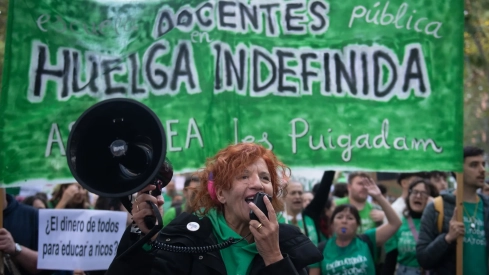
Madrid's public education system has taken to the streets again this Thursday to demand that Isabel Díaz Ayuso's Government sit down to negotiate. In the morning, thousands of teachers gathered in front of the Madrid Assembly. In the afternoon, another march traveled through the center of the capital from Atocha towards the Ministry of Education, accompanied by families and students. The president's response has been to accuse the protesters of acting "in a fascist manner" and to present the strike as an operation against her.
The day has left two scenarios of the same demand. In front of the regional Parliament, teachers have called for the resignation of the Minister of Education, Science and Universities, Mercedes Zarzalejo, and a negotiation on the conditions of public centers. Hours later, the banner "We defend public education, we defend the future" led the afternoon demonstration, which began at 6:00 p.m.
Amid whistles and green t-shirts, slogans such as "Public and quality education", "Where are you, Zarzalejo?" and "Here is the rociero choir" were heard. The demonstrators have turned the disqualification that Ayuso dedicated to them on Monday into part of the protest, with combs, castanets, tambourines, flowers and green accessories.
The indefinite strike began on October 14 and reaches its seventh day of strike in the classrooms this Thursday. The Community has estimated today's follow-up at 19.5%, while the organizers have placed it at 60%. These are estimates from both sides, different from the number of people who have attended the mobilizations.
Noveno día de huelga educativa en Madrid. Profesores de infantil, primaria, y secundaria recalmanan más inversión en educación pública.
— RTVE Noticias (@rtvenoticias) October 22, 2026
A esta hora los docentes se manifestan en el centro de la capital.
🎙️ @PaulaMurilloF pic.twitter.com/4WoN5Rvgfi
In the morning, the concentration gathered some 3,000 people, according to the Government Delegation, in the vicinity of the Assembly, in Vallecas. Participants cut off Pablo Neruda avenue and unfurled lanterns next to the commuter train station. "Zarzalejo, sit down for a while", they chanted to demand a meeting to address their demands. The protest dispersed around 1:00 p.m. without incident.
The cry "Don't hit" was also heard, in reference to the police charges of previous days. Those on Monday in front of the Santoña Palace, where Ayuso was participating in an event, have increased the discomfort of the group. The Government Delegation announced an investigation into that action by the National Police, after the strike committee denounced it as disproportionate.
📺 RTVE Noticias @rtvenoticias
— Educación CCOO Madrid (@CCOOEducaMa) October 22, 2026
Miles de profesores en huelga en la Comunidad de Madrid, que llevan siete días ya con su protesta, han llevado sus reivindicaciones este jueves frente a la Asamblea de Madrid.
⭕️⭕️PaseLoquePase#CCOOContigo pic.twitter.com/1lhh2HNIUw
Ayuso responds with disqualifications
While the teachers protested outside, Ayuso maintained inside the Assembly that "for every teacher who is claiming their rights there are nine activists". The president has accused the demonstrators of protesting against her "in a fascist manner" and has assured that she will not be intimidated. She has also attributed the mobilizations to Pedro Sánchez having decided to "burn the streets" ahead of the general elections.
The conflict calendar provides a fact that contradicts that electoral explanation. The start date of the strike was set in June, months before the early general elections. The organizers also sent a letter to Zarzalejo in August to demand a negotiation that would avoid the stoppages. The demands regarding schedules, staff, and resources were raised before this pre-campaign.
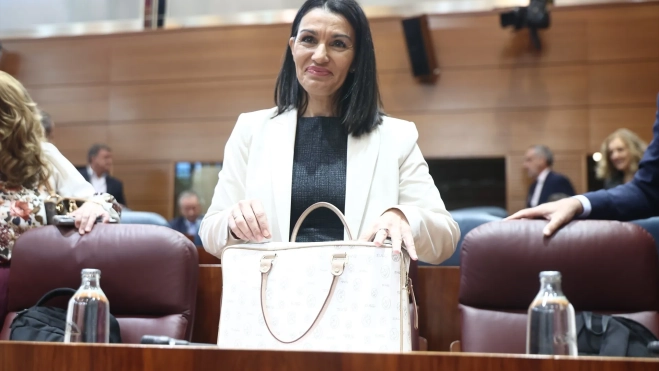
Zarzalejo has defended that the strikers intend to turn education into "a hostage of a political conflict" to "defeat" Ayuso. She has described their demands as unviable and has accused the organizers of inciting hatred and violence. The minister invokes the negotiations on professional career and the current sectoral agreement; the committee demands a specific table to address the list of demands of this strike.
The opposition has rejected that way of responding to the teaching staff. "They are teachers, they are not criminals", said the PSOE spokesperson, Mar Espinar, who attended the protest with colleagues dressed in green shirts. The Más Madrid spokesperson, Manuela Bergerot, has asked Ayuso to stop criminalizing the mobilizations. Emilio Delgado, candidate for Frente Amplio por Madrid, also joined the concentration.
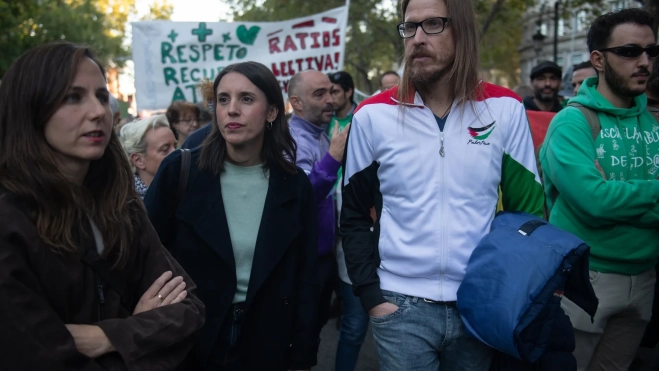
Podemos has also backed the mobilization. Ione Belarra ironized from the protest about celebrating "the first rociera strike in history" and acknowledged the daily effort of teachers to attend to students. "This is how we are going to stop the far-right in Spain, with more rights," she stated. Pablo Fernández also announced his participation in the afternoon march and claimed public education as the future of the country.
Aquí en la huelga rociera que tanto molesta a Ayuso. pic.twitter.com/oqzv2KdMOt
— Ione Belarra (@ionebelarra) October 22, 2026
Fewer students per classroom and more resources
The teachers' demands cover six main areas. They call for reducing teaching hours, lowering the number of students per class, strengthening attention to diversity, combating school segregation, improving salaries and facilities, and reducing bureaucracy. Specifically, they ask to go from 19 to 17 weekly teaching periods in Secondary, Vocational Training and Special Regime, and from 25 to 22 in Early Childhood and Primary Education.
The reduction of weekly classes would allow, according to the organizers, to have more time to prepare teaching and attend to students. The table includes more guidance and support staff, the recovery of link classrooms for students who need to learn Spanish, and changes in the current bilingualism model. It also calls for a salary increase of 600 euros per month and specific improvements for Special Education.
The material conditions of schools and institutes occupy another part of the demands. The group demands a sustainable climate control plan, removing asbestos, ending the construction of centers in phases, and incorporating a full-time administrative assistant per center. The spokesperson for the Madrid Teaching Workers' Union, Ruth Martínez, asked this Thursday that the Ministry "do its job" and sit down to negotiate.
The call brings together CCOO, UGT, CGT, CNT, STEM and Solidaridad Obrera, along with the platforms Menos Lectivas, Queremos FP and Educación Especial Digna. Maintaining the strikes means an economic effort for those who support them, due to salary deductions. This wear and tear has appeared in the testimonies of the teaching staff, who combine protests with center and zone assemblies to decide the next steps.
The mobilizations have reached the Reina Sofía Museum this week and will continue this Friday with an open assembly in the Retiro, according to the calendar disseminated by the organizers. To this conflict in non-university education are added the strikes called for November 4 and 5 in the six public universities in Madrid, whose workers and students demand more funding.
