
Childhood has changed a lot in recent decades. Children of the 60s and 70s grew up with greater freedom to play in the street, spend hours without organized entertainment, and resolve small daily conflicts on their own. Compared to that reality, today's minors often live under much more constant adult supervision and with an almost permanent offer of activities and stimuli.
This difference has fueled a common intergenerational comparison: were children from before really stronger, or did they simply grow up in different conditions? Psychology suggests that part of this perception may be related to the autonomy they developed during their childhood and the lesser intervention of adults in certain everyday situations.
A meta-analysis that brings together 52 studies has focused precisely on the effects of parental overprotection. The results, collected by a team of researchers led by Qi Zhang, from the University of Wisconsin-Madison, and Wongeun Ji, from Handong Global University, point to an association between excessive parental control and higher levels of anxiety and depression in young people. The researchers warn, however, that these results do not demonstrate a direct cause-and-effect relationship. The issue is not to recover the conditions of neglect or lack of supervision of previous decades, but to find a balance that allows minors to gain independence.
Why did children of the 60s and 70s develop more autonomy?
One of the main differences between childhood several decades ago and today is the freedom minors had to organize their own time. Playing in the street, inventing activities without adult help, or resolving arguments with other children were part of their usual routine. On many occasions, parents did not intervene in every difficulty. Minors had to find their own solutions, learn to manage conflicts, and face uncomfortable situations without receiving an immediate response from adults.
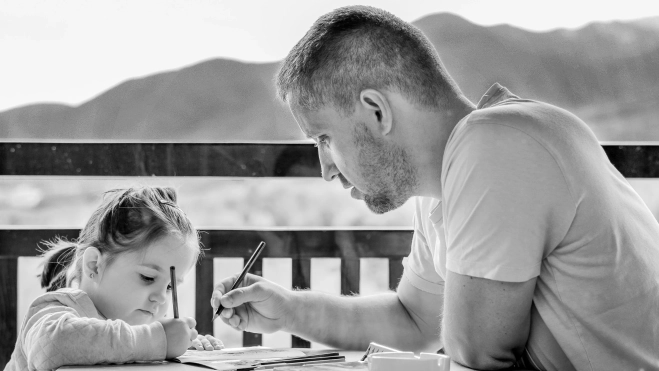
However, this reduced supervision could also entail risks and situations of vulnerability. For this reason, specialists do not suggest that the daily abandonment of that era was beneficial, but rather that some of the experiences that accompanied that childhood favored the development of personal skills. In this sense, emotional self-regulation plays a fundamental role. It is the ability to manage one's own feelings and behaviors without constantly depending on the intervention of another person. It is a skill that develops progressively through practice, experience, and the ability to face small frustrations.
Research has also linked free play with a better ability to regulate emotions. A 2022 study led by Yeshe Colliver, which analyzed data from more than 2,200 Australian children, found an association between time spent in unstructured play during preschool and better self-regulation years later.
What effects can parental overprotection have on children?
Parental overprotection should not be confused with parental care or involvement in their children's education. The problem arises when adults constantly intervene in situations that minors could resolve themselves, even when it comes to small difficulties typical of their age. Mediating any discussion between friends, solving all school problems, or continuously deciding what activities they should do are some examples of this excessive intervention.
The meta-analysis that gathered 52 studies found small but consistent associations between parental overprotection and certain emotional problems, especially anxiety and depression. Most of the participants analyzed were around 20 years old, so the results focus mainly on adolescents and young adults. These conclusions are supported by other research on play and childhood freedom. Risky play, understood as age-appropriate activities that involve exploring, experimenting, and taking on small challenges, can also contribute to the development of autonomy. However, specialists point out that more evidence is still needed to establish definitive conclusions.

Another factor that has changed is the independent mobility of minors. A report by the Policy Studies Institute for the Nuffield Foundation, based on more than 18,000 children from 16 countries, highlighted the decline in children's freedom of movement, related, among other reasons, to traffic and environmental restrictions. For this reason, experts insist that the solution is not to leave children unsupervised, but to offer them safe spaces where they can play, get bored, make decisions, and make mistakes. Autonomy does not appear overnight: it is built through small daily experiences that allow minors to gain confidence and learn to solve their own problems.
Contact
We are listening. Get in touch.
