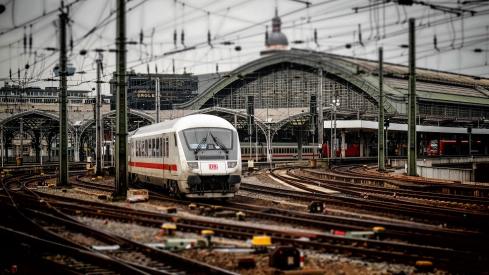
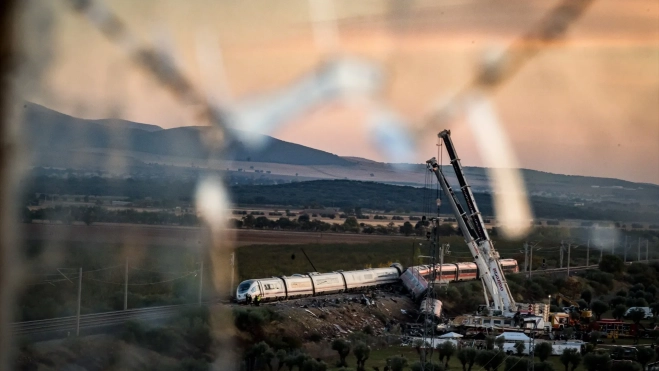
These sections allow controlling the circulation of trains and maintaining a safe distance between them. Their operation has gained importance after the railway accident in Urda (Toledo), in which a Renfe AVE collided with an Iryo train that was stopped.
Railway safety depends on different systems that control where each train is located and which parts of the track are free or occupied. One of the fundamental elements to achieve this are the so-called railway blocks, a division of the tracks that allows organizing traffic and preventing two convoys from coinciding in the same section.
This system is especially important on high-speed lines, where trains travel at very high speeds and need to maintain a sufficient distance to be able to brake in the face of any obstacle.
What are railway blocks and how do they work?
Railway blocks are the different sections into which a train line is divided to control circulation. Each one has a determined length and is protected by signals or automatic systems that indicate whether the track is clear or if another convoy is occupying it. Their operation is simple: when a train enters a block, that section becomes occupied. Therefore, another train cannot access it until the first one has left and the necessary safety conditions are met.
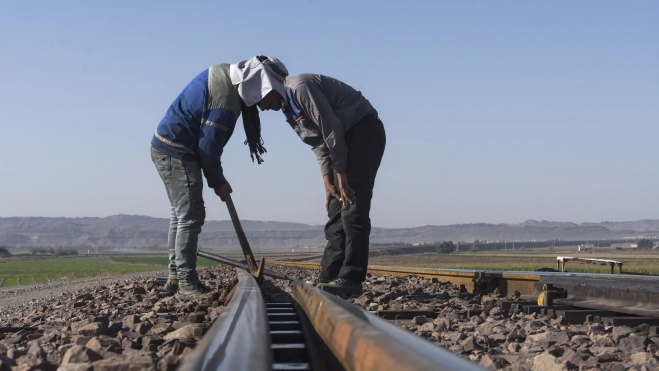
In this way, railway systems can control the position of convoys and prevent one from catching up with another that is traveling ahead or that is stopped. The length of these sections can vary depending on the characteristics of each line and the signaling system used. The important thing is that there is sufficient separation between trains to ensure that they can stop without causing a collision.
On high-speed lines, this control is even more important due to the speeds that convoys reach. For this reason, safety systems continuously monitor circulation and transmit information about the state of the track.
What happens when a train enters a block that is already occupied?
When a train occupies a block, the signaling system must prevent another convoy from entering that same section without the safety conditions being met. To do this, it uses signals and automatic mechanisms that regulate when each train can advance. In the case of lines equipped with the LZB system, this continuously controls the speed and distance between trains. If it detects that a section is occupied, it transmits that information to the driver and limits circulation to prevent another convoy from accessing that area.
However, when the LZB system stops working, there are other procedures to manage circulation. One of them is the Lateral Signaling Block (BSL), which uses signals located next to the tracks to regulate the passage of trains. This does not mean that convoys can circulate without safety measures. Drivers must follow the corresponding instructions and respect the limitations established by railway regulations.
Precisely, the operation of these systems has become one of the issues being investigated after the Urda accident. The LZB breakdown and the orders received by the AVE and Iryo drivers are part of the circumstances that must be clarified to understand how the collision occurred.
