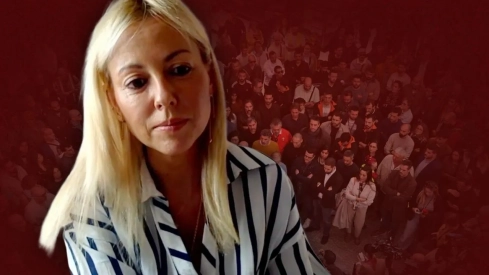
The clash of two trains in Toledo, which has left at least 69 dead, has shocked Spain. Psychological attention is essential to help those who have lost a loved one and those who have survived the accident to cope with what they have experienced, as well as to guide their environment on how to accompany them in these moments.
"We have to talk about many psychological aspects. A very important one, that of the relatives who are still waiting for news of their loved ones, whom we must accompany," comments psychologist Ana Villarubia in an interview with 'ElConstitucional.es'.
The specialist reminds that help must also reach the survivors and the professionals who have intervened in the emergency. Each group faces different experiences, but all may need support to cope with what happened.
For those who want to help an affected person and do not know how to do it, Villarubia points out a starting point: respect for their way of living and expressing pain. "Intimate and personal experiences are varied, they are tremendously diverse, they do not have to obey a pattern, not by a long shot."
El @copclm habilita una segunda línea del Teléfono de asistencia psicológica a los afectados por el accidente ferroviario. A la línea ya existente (665 65 84 72) el Colegio Oficial de Psicología de Castilla-La Mancha ha sumado el número 636 03 94 32. Ambas líneas están activas de lunes a domingo, entre las 10:00 y las 20:00 h.
— Col·legi Oficial Psicologia Comunitat Valenciana (@COPCV) October 30, 2026
Accompanying requires leaving space for those differences. The psychologist explains that emotional containment does not consist of stopping what someone feels: "To contain, which we psychologists talk a lot about containing, does not mean to limit." It is about being with that person so that they can express their emotions without feeling obliged to do so in a certain way. Anger, sadness, frustration, or annoyance may appear, but also blockage and silence. All of them have a place in that accompaniment.
The role of the environment and, especially, of professionals is to help sustain these emotions and prevent the person from becoming overwhelmed. Listening does not require forcing a conversation or expecting a specific reaction.
The impact can appear days or months later
Villarubia explains that she attends to relatives of people affected by the Adamuz tragedy and that she knows firsthand the consequences that an accident can leave beyond physical injuries. "He who did not break down after five minutes can break down after five days or five months," she warns. For this reason, she insists on the need to have resources to help those affected even after the first hours of the emergency have passed.
The psychologist describes the fear that can spread after a tragedy of these characteristics and points out that some people may experience symptoms of post-traumatic stress without having directly suffered the accident, due to having felt what happened very closely.
She also recalls that leaving the place without serious injuries does not mean having been spared from the psychological impact. Some people, she explains, wondered how they were going to be able to continue living with what they had seen, despite not presenting significant physical injuries.
Guilt for surviving or for not having been able to do more
Another feeling that may appear is survivor's guilt. Villarubia explains that it is not always limited to wondering why one has survived and another person has not. It can also be related to the feeling of not having helped enough.
“This happens a lot, survivors always want to help,” she points out. They want to collaborate and contribute to the rescue, but when the responsible teams arrive, it may be necessary to remove them and take them to a safe place to avoid new risks. That withdrawal can leave frustration, even among those who were helping. “I was left wanting to have been able to do more,” is one of the expressions that, according to the psychologist, are repeated in these cases.
The accompaniment should help them review that demand and understand what they could really do with the means they had and in the circumstances they were experiencing, whether they acted or were blocked.
The role of journalism
The interview also addresses the effect of hoaxes and unverified theories on families. Villarubia emphasizes that emotional support must be accompanied by an account of the facts adjusted to reality. “The family member absorbs both the good and the bad like a sponge,” she explains. In a moment of uncertainty, they may cling to any information that offers them hope or an explanation, even if it is false, or receive messages that increase their despair.
For this reason, she asks not to disseminate unverified content and appeals to a responsibility that goes beyond professional practice: “I don't call it ethical responsibility, but rather human responsibility.” The psychologist recognizes, at the same time, the role of the media in giving a voice to victims and allowing them to express their pain. Her request is not a general criticism of journalism, but a call to care about what information is transmitted, who communicates it, and when the affected person receives it.
“It is important to inform, it is important to show but without traumatizing”
Regarding the images of the accident, Villarubia summarizes the criterion she considers fundamental: “It is important to inform, it is important to show but without traumatizing.”
The specialist reminds that exposure to images can have emotional consequences also for those who were not at the scene. For this reason, she advocates assessing what each photograph or recording contributes to the knowledge of the facts.
“As long as the image is truly illustrative and does not contribute more or less than it has to contribute,” she points out. The purpose is to inform about what happened without adding unnecessary suffering to those who experienced it or to those who receive those images.
ℹ️ Activado Plan de Asistencia a las Víctimas de Accidentes Ferroviarios y a sus Familiares (PAVAFF). 📞 Teléfono de atención a familiares 900 10 10 20.
— InfoRenfe (@Inforenfe) October 28, 2026
