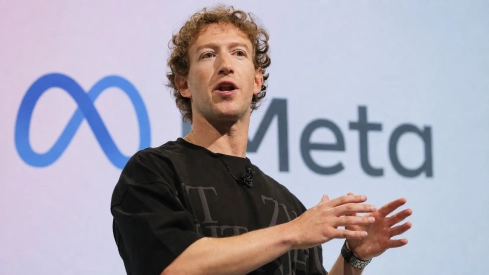
Meta, the company that owns Facebook, Instagram, and WhatsApp, must pay 25 billion dollars (about 21.5 billion euros) for misleading consumers about the use and protection of their personal data. A New Mexico judge set this penalty after a jury concluded that the company violated state consumer protection law on more than 43 million occasions.
The decision, announced this Wednesday, October 21, represents a new judicial blow for the company led by Mark Zuckerberg. The case is not limited to privacy: it also analyzes Facebook's statements about how it shared its users' information and how it acted against content related to hate and disinformation.
A millionaire fine for the use of personal data
The penalty comes after the jury determined in September that Facebook had made misleading statements about its privacy policies, third-party access to data, and content moderation. New Mexico law allows for a fine of up to $5,000 for each violation, which raised the company's financial liability to an extraordinary figure.
Judge Francis Mathew initially calculated a penalty exceeding $219 billion, but finally reduced it to $25 billion. The state Attorney General's Office had requested between $35 billion and $40 billion, while Meta argued that the amount should be limited to about $3.4 billion.
New Mexico Attorney General, Raúl Torrez, has argued that the decision serves as a warning to large technology companies. The fine money will be allocated to the state's education system, although the final amount could change if Meta's appeal is successful.
The Cambridge Analytica case, at the center of the conflict
The origin of the case is the Cambridge Analytica scandal, which came to light in 2018. This political consulting firm obtained personal information from up to 87 million Facebook profiles through an external application. The data was used to create user profiles and target political advertising during the 2016 US presidential elections, in which Donald Trump was elected president.
The investigation focused on how this information had been collected and shared and whether users truly understood the extent of access to their data. In court, the New Mexico Attorney General's Office argued that Facebook had offered misleading information about these practices and about the measures taken to prevent misuse.
Meta has rejected the accusations and has questioned both the evidence and the calculation of the infringements. The company maintains that the state did not demonstrate that its statements had caused real harm to consumers and considers the sanction excessive.
Another legal front for child safety
The ruling adds to another proceeding against Meta in New Mexico related to the protection of children and adolescents. In March, a jury imposed a fine of 375 million dollars on the company for practices that, according to the judicial decision, harmed the safety of young users. In August, the court added another 567 million dollars and ordered changes in child protection measures on Facebook and Instagram.
In addition, in August, Meta reached an agreement of up to 16.68 billion dollars with a group of US states to resolve other lawsuits related to child safety and the possible effects of its platforms on the mental health of young people. The company denied any wrongdoing in that case.
With these proceedings, Meta faces increasing judicial pressure in the United States over its privacy policies, child safety, and the operation of its social networks. The new sanction from New Mexico, however, is not necessarily final: the company plans to appeal it, and the outcome of that process may modify the amount it ultimately has to pay.
