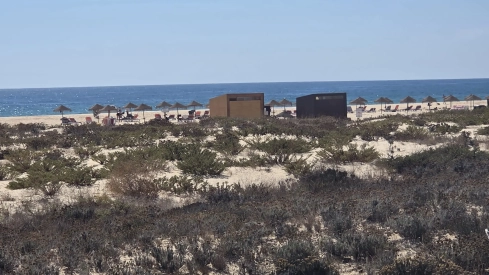
It's called Barreta, but they know it as Desierta. The island, barely 9 km long and 600 meters wide, was born united, like a Siamese twin, to another slightly larger island from which the opening of the Barra Nova channel separated it. Small, yes, but at the same time large enough to be the dwelling where for years only one person has lived. For 30 years, Fernando Alves has been its tenant, guardian, custodian, and naturalist.
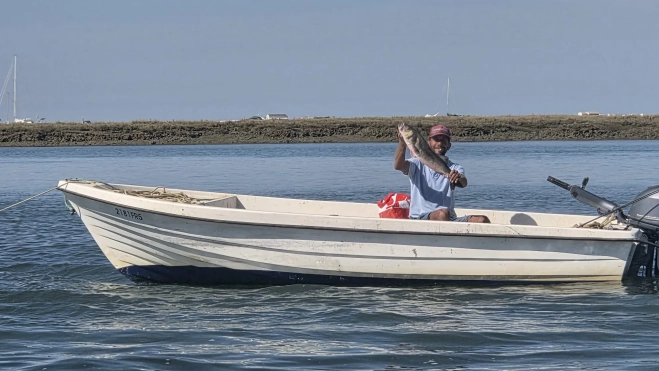
Unlike Culatra, that Siamese twin from which it was separated, Barreta was never, in reality, a place with stable settlements but rather a transit point for fishermen accustomed to enjoying, until a few decades ago, transparent waters where the largest colony of seahorses swam. Today, barely two species remain, but fortunately, Ría Formosa, of which both islands are a protective barrier against the strong onslaughts of the Atlantic Ocean tides, still preserves those transparent waters, abundant aquatic life, and birds that take advantage of it.
White sand, dunes where marram grass, some thistles, daffodils, everlastings, and pinks add complementary colors to the surprising blue of the waters that kiss Cape Santa Maria, the southernmost point of continental Portugal.
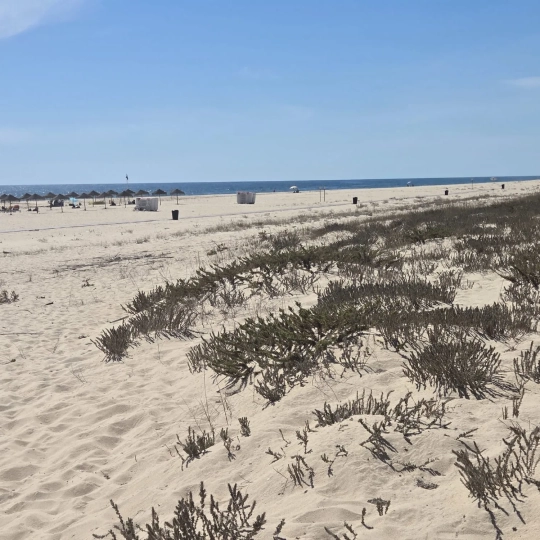
There isn't much to do on this island, which can be reached by boat from Olhão or Faro. Perhaps, to be more precise, one should say that all there is to do is enjoy an intact landscape, still unspoiled by humans; walk on that sand that slips through your fingers; venture, always with caution, into waters that are not excessively cold, and sunbathe lying on a towel or in the shade of an umbrella. You can, depending on the season, feel like Robinson on an island where Friday does not yet live.
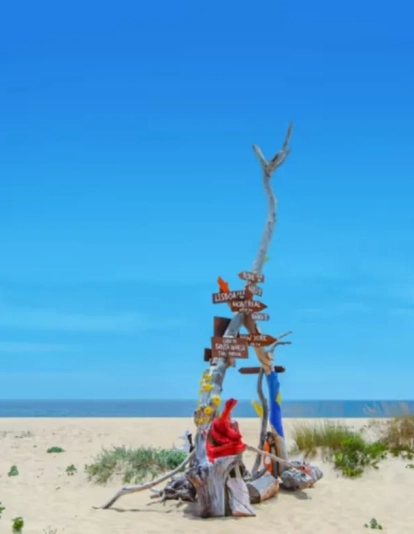
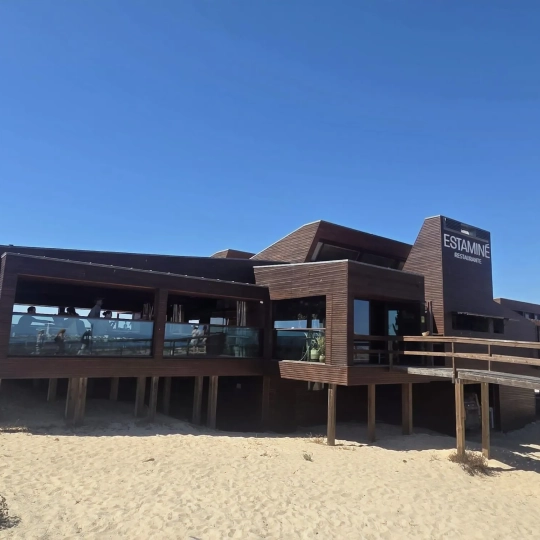
Although the name Cape Street Mary has been given to "the construction" of castaways made from pieces of wood washed ashore by the tides and painted by visitors, the only permanent building on the island, far from this point, is the Estaminé restaurant, which daily receives the best catches from fishermen.
Alves, named Fernando, and nicknamed “A Raposa de Deserta” has been living in Barreta since 1981. He doesn't seem to get bored or miss company, and if he finds it, he converses and even invites people to eat or cook.