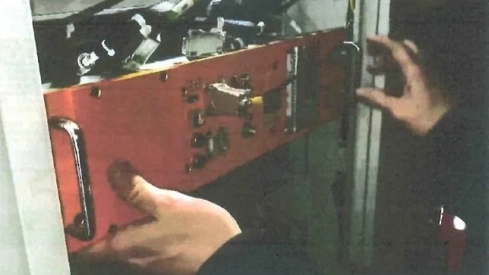
Judge Cristina Pastor has summoned Iryo and Renfe technicians this Thursday, November 12, to the Montoro Court of First Instance, in Córdoba, to examine the data from the black boxes of the two trains involved in the Adamuz accident. On January 18, several Iryo cars derailed and invaded the track on which a Renfe Alvia was traveling. The collision caused the death of 46 people and left more than 120 injured.
Technicians from Hitachi and Hasler Rail, the manufacturer of the recorders, will also attend the proceeding, in addition to the judicial experts. The black boxes store data such as speed, braking commands, and signals from safety systems. In a November 6 order, the judge requested that the court's IT team prepare the means needed by the manufacturer to read these records during the session.
Hasler Rail will have to document how the files were loaded, what each signal means, and how the data was ordered to reconstruct the sequence. To the technicians from the other companies, the judge has asked them to relate the signals from the different systems to explain how each train responded and what factors may have contributed to the accident. The specialists will have ten days to submit their reports after the proceeding.
The court had already requested urgent access to the reading programs and the assistance of the manufacturer, who owns the licenses, in May. In June, the Junta de Andalucía authorized an expense of 1,980 euros plus VAT to cover that work.
The 15 seconds recorded by the black boxes
The data was downloaded on March 5 in Madrid, at the headquarters of the then Railway Accident Investigation Commission (CIAF). The operation was carried out in the presence of the Justice Administration lawyer and Judicial Police agents. Images from the Iryo's interior cameras were also extracted. Three copies of the dump were made, two for the Judicial Police and one for the commission, which carried out a first analysis on March 9.
That analysis placed the first anomaly associated with the derailment, an electrical disconnection in the Iryo, at 19:43:29. Ten seconds later, the record shows that its driver activated the emergency brake. At 19:43:44, the Alvia's black box stopped saving data. The commission placed the probable impact between the two trains at that moment.
This Thursday's proceeding will be carried out with the recorders that were already downloaded in March. The Civil Guard has informed the court that it still cannot locate two other Alvia equipment, of the DEUTA type, installed in the cabin and at the rear of the convoy. The agents have found the connection cabinets that were next to those devices.
In parallel, the investigation continues to examine the track. The Civil Guard has identified the breakage of a weld between two rails as the first relevant anomaly it detected when inspecting the site. The judge has given the agents, the judicial experts, and the independent authority that has replaced the CIAF ten days to report on the status of their investigations and pending actions.
The independent authority has already informed the victims' representative that, due to the complexity of the case, it plans to publish a provisional report and that the definitive one will not be ready within twelve months after the accident.
Contact
We are listening. Get in touch.
