The Supreme Court has applied the amnesty law for the first time since its entry into force. The Criminal Chamber has issued four orders that extinguish the possible responsibility of eight people accused or convicted of crimes of disobedience and public disorder related to the 'procés'.
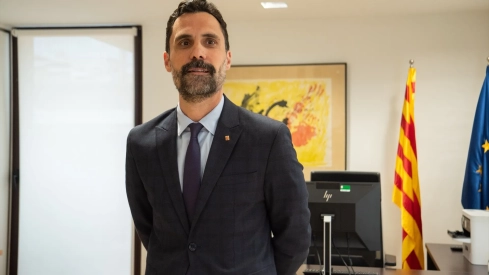
The decision affects the former president of the Parliament Roger Torrent, three other former members of the Bureau of the Catalan Chamber, the former mayor of Sabadell Maties Serracant and three participants in the October 2019 protests against the sentence of the independence leaders.
The magistrates had waited for the pronouncement of the Court of Justice of the European Union before ruling. Once Luxembourg's endorsement of the norm was known, the Chamber considers the obstacles that kept these procedures paralyzed to have been cleared.
The resolutions of Torrent and the Bureau of the Parliament
Roger Torrent, Josep Costa, Eusebi Campdepadrós and Adriana Delgado were judged for allowing the processing of several parliamentary resolutions favorable to self-determination and contrary to the monarchy during the months of October and November 2019.
The prosecution maintained that the four members of the Bureau had disobeyed the warnings of the Constitutional Court. The High Court of Justice of Catalonia acquitted them in 2022 considering that those warnings allowed different interpretations and lacked a sufficiently clear and specific mandate.
The Prosecutor's Office appealed the acquittal before the Supreme Court, so the sentence still lacked finality. The Criminal Chamber now declares that the facts fit within the scope of the amnesty and that the pending appeals have become moot. "It is appropriate to declare the facts that were the object of the procedure amnestied," states the order. The resolution extinguishes any responsibility that could arise for the four former members of the Bureau and definitively closes their case.
The law allows the application of amnesty during any phase of the procedure, even when there is an appeal against an acquittal. That is the precept used by the Supreme Court to end the process opened against Torrent, Costa, Campdepadrós and Delgado.
The former mayor who facilitated the premises for 1-O
Another of the autos benefits Maties Serracant, former mayor of Sabadell. The municipal leader was convicted of serious disobedience after facilitating public facilities for the celebration of the referendum of October 1, 2017. Serracant signed several decrees to allow municipal premises to be used during the vote despite resolutions that had suspended the consultation. The conviction included a fine of 1,800 euros and a four-month disqualification from holding public office.
The Supreme Court considers that these facts were executed within the temporal and material framework covered by the law. The amnesty extinguishes the conviction and eliminates the criminal consequences linked to his participation in the organization of the referendum.
Stones, bottles and barricades during the protests
The other three beneficiaries were convicted for their participation in the disturbances that occurred after the 'procés' sentence in October 2019. Two of them received sentences of one and a half years in prison for throwing stones during a concentration in front of the Girona courts.
Around 300 people gathered during the early hours of October 19 in the vicinity of the judicial headquarters. The protesters tore off fragments of the pavement and used them as projectiles after several riot units moved to other parts of the city.
The fourth auto affects a man sentenced to more than four years in prison. The proven facts stated that he threw stones and bottles at agents, collaborated in the erection of a barricade and fanned a fire started by other participants while hiding his face with a balaclava.
The Chamber understands that the protests had a direct relationship with the sentence handed down against the leaders of the independence process. The crimes of public disorder also fall within the scope of application of the law and lack a specific exclusion that prevents their amnesty.
Puigdemont and Junqueras still pending
The first application of the amnesty also does not immediately change the situation of Carles Puigdemont, Oriol Junqueras and the rest of the leaders convicted or prosecuted for embezzlement. The Supreme Court considers that they obtained a patrimonial benefit by financing with public funds expenses that they should have paid out of their own pocket.
That interpretation has led the Chamber to exclude them from the law and maintain the national arrest warrant against Puigdemont. Those affected have appealed to the Constitutional Court, which will begin on September 22 with Jordi Turull's appeal.
The doctrine established in that procedure will pave the way for Junqueras, Raül Romeva, Dolors Bassa, Puigdemont, Toni Comín, and Lluís Puig. For Roger Torrent and the other seven beneficiaries, the cases have ended this Friday. The decision on the 'procés' leadership will have to wait until September.
Add ElConstitucional.es as a preferred Google source for free.
Stay informed about all the latest breaking news with the best information. Against disinformation, for democracy and social rights.
