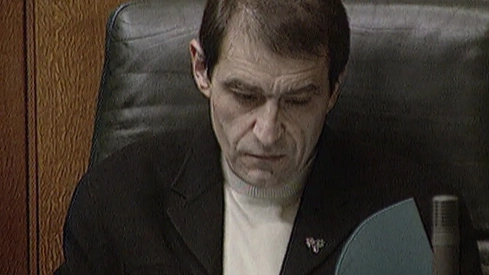
The Paris Court of Appeal has acquitted this Thursday the historic ETA leader José Antonio Urrutikoetxea, alias 'Josu Ternera', in the last trial he had pending in France. The court does not consider it proven that he belonged to the terrorist organization between December 2002 and May 2005, a period during which he remained on the run from Spain.
The ruling closes the French judicial front opened against Ternera since his arrest in 2019 in the Alps, after almost 17 years in hiding. The verdict, although it represents a victory for his defense in this specific case, clears the way for him to be handed over to Spain, where the Audiencia Nacional is seeking him for several pending cases.
The main Spanish claim is linked to the attack against the Guardia Civil barracks in Zaragoza in 1987. ETA killed 11 people there, six of them minors, and left 88 injured. The Spanish Prosecutor's Office attributes responsibility to him as an alleged member of the leadership of the group that decided to place the car bomb. Ternera denies his participation.
A verdict for lack of evidence
The French trial focused on determining whether Urrutikoetxea remained integrated in ETA between 2002 and 2005, after fleeing Spain when he was a Basque parliamentarian. The main evidence was DNA remains and fingerprints found in two ETA safe houses in Lourdes and Villeneuve-sur-Lot, also used by the then military chief of the group, Peio Eskisabel, and by his lieutenant, José Manuel Ugartemendía.
The French Prosecutor's Office had requested five years in prison with a suspended sentence and a ban on remaining on French soil. The court has gone further and has issued an acquittal, understanding that this evidence was not sufficient to prove his membership in the terrorist organization during that period.
Ternera had already been convicted in absentia in 2010 for this same case, but after his arrest in France he appealed and managed to be tried again in person. Since then, his lawyers had chained together appeals and procedures that delayed his extradition to Spain.
The cases awaiting him in the Audiencia Nacional
French justice already authorized his extradition to Spain in June due to a European arrest warrant issued by judge Santiago Pedraz, who is seeking him for his alleged responsibility as an ETA leader during the years he remained a fugitive. This extradition was conditioned on the completion of the last open procedure in France, precisely the one that has now been resolved with an acquittal.
In addition to the Zaragoza attack, the Audiencia Nacional also seeks him for the alleged financing of ETA through the herriko tabernas. In 2022, another complaint was admitted against him for the T-4 Barajas attack in 2006, which killed two people and broke the group's last truce.
France rejected other Spanish requests at the time, including one that sought to try him for the 1980 murder of Luis María Hergueta, a Michelin executive, and another case for crimes against humanity. The key now lies in the already accepted European arrest warrants and the deadlines for executing the extradition.
The 75-year-old former ETA leader currently lives in the French Basque Country under judicial control. His lawyers can still try to gain time through procedural means, but the closure of the last French case changes the scenario. The Audiencia Nacional awaits his extradition to take his statement for the cases that remain open in Spain.
