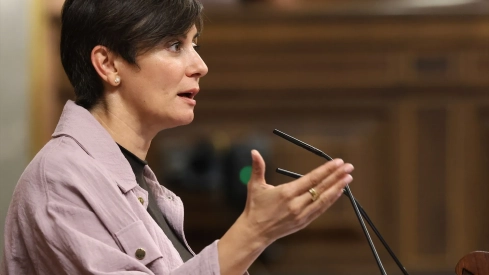
The Minister of Housing and Urban Agenda, Isabel Rodríguez, has harshly criticized the leader of the Popular Party, Alberto Núñez Feijóo, whom she accused of "wanting to be on the sidelines" in a priority issue such as housing and stated that he "decided to be irrelevant in this legislature."
"I expect nothing from Feijóo because he has shown throughout these three years that he decided to be irrelevant," she said in an interview on Cadena SER, although she clarified that her call is directed at PP voters. Rodríguez also recalled that there are regional governments of the PP "that could have frozen rent price increases and decided not to do so."
"We are moving in the right direction," according to the minister
On the parliamentary front, the minister defended the two government decrees that will be voted on this Friday in Congress and acknowledged that guaranteeing the right to housing still requires much effort, warning that, if they go ahead, "nothing ends."
When detailing the content of the norms, she admitted that she had to make concessions in a text that "cannot please 100% of political forces," although she defended that it is good for the majority of Spaniards and that the debate has focused on the nuances.
Likewise, Rodríguez warned that housing has ceased to fulfill its social function to become a financial asset, which requires a coordinated response at the municipal, regional, state, and European levels.
Maricarmen and the commitment to stop new evictions
Asked about the eviction of the elderly woman Maricarmen in Madrid —the case that triggered the protests in Puerta del Sol—, the minister assured that, if the first decree is approved, "there will be no more evictions of vulnerable people in Spain."
Rodríguez harshly criticized the owning company, Urbagestión, which she called a "very vulture and very scavenger SME" for not responding to the Ministry's attempts at dialogue until the case became a "national disgrace." To close her intervention, she insisted that approving these measures responds to a "social interest" in the face of the constant refusal of the opposition.
