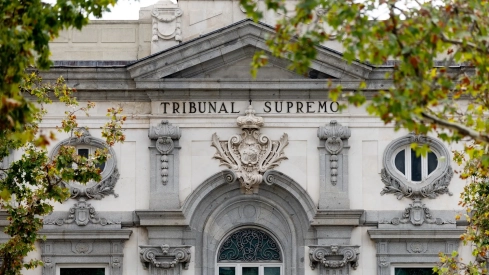
The Government delivered this Wednesday to the Supreme Court the nominal list of 163,355 people naturalized under the so-called "grandchildren's law", required to apply the precautionary measures affecting their participation in the elections of November 29. Sources from the Ministry of Foreign Affairs consulted by 'ElConstitucional.es' confirm that the department sent the list this morning to the high court, the National Institute of Statistics, and the Central Electoral Board.
Of these files, 901 contain accreditation of exile status certified by consuls, the same sources specify. This documentation on the ancestors is decisive for the exception that the Supreme Court has established to the suspension of voting from abroad.
The figure delivered exceeds by 335 people the 163,020 affected individuals that the Executive had previously communicated. The novelty is that now the identity of the people included in the list has been provided, information that the court considered essential to determine to whom the electoral restrictions should apply.
The documentation was submitted within the deadline set by the Contentious-Administrative Chamber, which ended at 3:00 p.m. this Wednesday, October 28. Last Friday, the Supreme Court had addressed the requirement to the Ministers of the Presidency, Justice and Relations with the Cortes, Félix Bolaños, and of Foreign Affairs, José Manuel Albares.
The order warned of the possibility of imposing coercive fines of 1,000 euros, repeatable until compliance, if the deadline passed without receiving the list. It also contemplated referring the proceedings to demand any criminal liabilities that might correspond in case of non-compliance.
The State Attorney's Office has requested that the list be confidential, due to containing personal data, to prevent illegitimate use of that information. This is a request to the court regarding the treatment of the names delivered.
What happens now with the November 29 vote
The delivery allows progress in identifying those affected and in applying the precautionary measures. The Supreme Court has ordered the Electoral Census Office to review the list corresponding to the November 29 elections and exclude the people included in the suspension, with the exception of those who have the required consular certification.
The conflict stems from two appeals filed by the far-right Vox and Iustitia Europa against an agreement of the Central Electoral Board related to the application of the Democratic Memory Law and its development. The eighth additional provision of the norm, approved in 2022 and known as the "grandchildren's law," opened different avenues to obtain nationality, including that of descendants of Spaniards who suffered exile.
One of the issues discussed is the presumption incorporated by the Justice instruction of October 2022. This establishes that the condition of exile is presumed for Spaniards who left the country between July 18, 1936, and December 31, 1955, by proving their departure. To be exempt from the electoral suspension, the Supreme Court requires a certification of the ancestor's exile under the conditions set out in its rulings, without applying that presumption.
The measures were agreed upon in September and confirmed on October 12. They affect certain registrations and their effects on the Electoral Census of Absent Residents (CERA) for the upcoming general elections. Those affected retain their Spanish nationality; the procedure refers to the conditions under which they can exercise suffrage from abroad.
The decision has met with disagreements within the Chamber itself. Magistrate María Alicia Millán Herrandis has maintained her opposition to the measures. In her dissenting opinion to the order of October 23, she warns of the legal uncertainty and operational uncertainty they generate regarding the census, contrary to the demands for certainty and stability of an electoral process.
While the order is being applied, the foreign vote calendar continues to advance. The Supreme Court has allowed the first shipment of electoral documentation to take place between October 24 and 30, with an express warning to those affected about the provisional nature of their inclusion and the conditions required to vote.
The order also specifies how the envelopes of those who are excluded from the purged list should be handled. Consulates will receive their documentation but will keep it separate to send it to the corresponding Provincial Electoral Board. During the scrutiny, the boards will use the revised census and keep the envelopes of excluded voters separate, recording this in the minutes.
