Unaccompanied migrant minors have become one of the most vulnerable groups after the migratory crisis in Ceuta. In this context, the Government of Spain has just announced an extraordinary allocation of 25 million euros to reinforce their care and reception. However, the Popular Party already anticipates that the autonomous communities where they govern will not collaborate in the distribution of these minors.
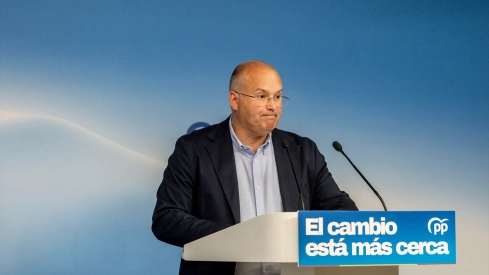
The general secretary of the PP, Miguel Tellado, when asked about this issue at a press conference, avoided directly answering the unknown and defended that "it is not a migratory crisis, it is a national security crisis." He also explained that the Government's duty "is that those immigrants who entered the autonomous city illegally return the way they came and leave through that border crossing that Spain and Morocco have enabled for them to leave the city."
"This has nothing to do with previous situations," Tellado reiterated. "The Government of Spain, through the Ministry of Interior and also that of Defense, must guarantee the security of the autonomous city of Ceuta," the 'popular' deputy continued. "An avalanche of almost 80,000 people has entered the autonomous city, and the Government is responsible for ensuring that, from where they entered, they leave again," the general secretary of the PP concluded in his speech.
25 million euros to care for unaccompanied minors
The migratory crisis that has occurred in Ceuta has generated an unknown regarding the protection of unaccompanied minors who have entered Spanish territory. In this regard, the Government spokesperson and Minister of Inclusion, Social Security and Migration, Elma Saiz, has just announced an extraordinary allocation of 25 million euros to care for the minors.
With this money, Saiz has assured that the Government demonstrates that it "has been and will continue to be" with Ceuta and especially alongside "the most vulnerable."
The announcement has occurred at the same time that the telematics meeting of European Interior Ministers is taking place, which began at 10:00 a.m. and in which Minister Fernando Grande-Marlaska participated, who defended before his counterparts the Spanish migratory policy, which he defines as "preventive, not short-term, which offers stable and solid results, thanks to cooperation with countries of origin and transit, such as Mauritania, Senegal, Gambia and, also, Morocco." In addition, he insisted that Morocco is "a loyal partner with whom it maintains close collaboration based on mutual trust" and reiterated that "Spain's commitment to its European obligations cannot be doubted or Spanish diligence in migratory matters questioned."
Add ElConstitucional.es as a preferred Google source for free.
Stay informed about all the latest breaking news with the best information. Against disinformation, for democracy and social rights.
