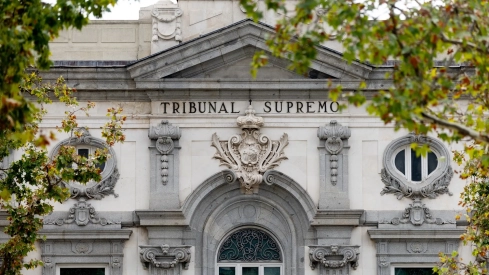
The Official State Gazette (BOE) published this Thursday the decision of the Supreme Court to maintain the precautionary suspension of the right to vote of those naturalized by the “grandchildren law”, so that, starting tomorrow, the 163,020 affected have a period of five working days to present allegations.
In order to avoid their defenselessness, the Chamber has offered those affected the possibility of appearing in the procedure as a co-defendant party and submitting allegations within a maximum period of five working days, a count that begins the day after the publication of the operative part of the two orders issued on the 12th in the BOE.
In addition, and to reinforce the publicity of the decision, the Supreme Court has requested that its orders also be disseminated in the Single Judicial Edictal Board, the official means for consulting judicial resolutions, and on the corresponding notice board of Spanish consulates.
The judicial route, with lawyer and solicitor
The option of appearing in the process requires the procedure of lawyer and solicitor, a route that those affected see as the most costly to try to recover their right to vote.
All this, moreover, in a scenario in which the Supreme Court would have to resolve the challenges in record time, provided that there is not an avalanche of appearances, something that would further complicate giving a well-founded answer just over a month before the elections.
The consular alternative remains open
In parallel to the judicial route, those affected keep the consular route open, which is the other option available, after the Constitutional Court has ruled out that it can act before the 29-N elections.
The Chamber points out, in this regard, that “the suspension will not apply” when those in charge of the consulates “issue, under their responsibility, a certificate proving that, as of August 1, 2026”, these people acquired nationality by documenting that they were children or grandchildren of those repressed “for political, ideological or belief reasons or sexual orientation or identity”, as established by the norm and not by the instruction of Justice.