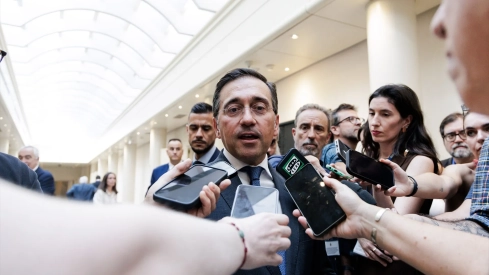
The Minister of Foreign Affairs, European Union and Cooperation, José Manuel Albares, acknowledged this Monday that it will be “very difficult” for consulates to verify in time who obtained nationality under the so-called “grandchildren's law” and are descendants of exiles, so that they can vote in the elections on November 29, as requested by the Supreme Court.
In statements on Telecinco, José Manuel Albares assured that, as soon as the notification from the Supreme Court was received, a telegram with “very precise instructions” was sent to all consulates to act “diligently” and “mobilize all the personnel they need”, in addition to having canceled all consuls' permits.
The minister indicated that the Electoral Census Office already has the data of those naturalized in 2025 and 2026, as they were incorporated directly through DICIREG, the new digital Civil Registry, which allows verifying who are effectively descendants of exiles and, therefore, have the right to vote.
Regarding the rest of the cases, José Manuel Albares explained that “a computer tool has been created to upload the data so that the Electoral Census Office has it”, a procedure that, he stressed, must be done “manually”.
A deadline that the Ministry considers insufficient
The head of Foreign Affairs recalled that the Directorate General of Consular Affairs had already informed, through the State Attorney General's Office, that the process would take “at least until January” to complete, and insisted that, if it was already “difficult” to arrive in time for the regional and municipal elections in May, “in such a short period it seems even more difficult”.
Even so, he defended that “all means are being put in place” and added: “It won't be for lack of trying on our part”, while emphasizing that “no one is obliged to do the impossible”.
Defense of consuls against PP and Vox
On the other hand, José Manuel Albares once again defended the consuls and the staff of the Foreign Service against what he described as a “campaign of harassment, of slanders, often personal, with names and surnames and photographs of the Spanish consuls in the world”.
The minister defended that their “honorability and professionalism” cannot be questioned when they are undertaking an “unexpected task”, with a “totally insufficient time”, which is added to their usual functions, such as registering births or issuing passports, in addition to the procedures linked to external voting for November 29.
In this regard, he demanded that PP and Vox cease their attacks, because, he affirmed, “the professionalism and honorability of the consuls and all civil servants of the Foreign Service are at stake”. “It is really something that I will never tolerate”, he concluded, before remarking: “I will always support them and defend them against these attacks from both the PP and Vox on their professionalism”.