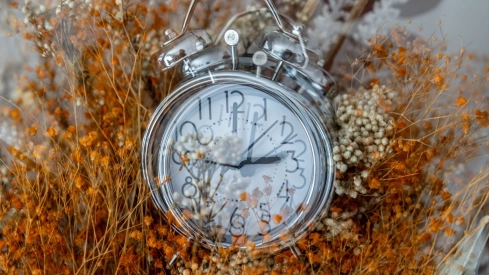
Winter time will begin in Spain in the early hours of Saturday to Sunday, when, at 03:00 hours, clocks must be set back to 02:00, a change that once again places citizens in the usual calendar of the cold season and that, in addition, will allow for an extra hour of sleep.
The new schedule will remain active until March 28, 2027, after the European Commission automatically renewed the seasonal change system last March, a practice that has been questioned for years, but which remains in force despite the open debate about its continuity in the European Union.
From this weekend, the population will notice that it will dawn and get dark earlier, a direct consequence of the time adjustment that, at this time of year, coincides with the progressive decrease in daylight hours after the autumn equinox on September 23, when there were practically the same hours of day as night.
Less light until the winter solstice
As autumn progresses, the duration of the days will continue to decrease until reaching its minimum on December 21, the date of the winter solstice, with notable differences depending on the city. That day there will be 9 hours and 7 minutes of light in Girona, 9 hours and 17 minutes in Madrid, up to 9 hours and 36 minutes in Huelva or 10 hours and 20 minutes in Santa Cruz de Tenerife.
The European debate on time change
The discussion about the usefulness of time change is not new. In 2019, the European Parliament voted in favor of ending this practice, originally designed to save energy by bringing working hours closer to sunlight, although the decision has not yet led to a definitive elimination of the system.
Despite this controversy, the Official Journal of the European Union published on March 18 a communication with the start dates of summer time and winter time for the next five years, which sets the calendar for the next adjustments.
Effects on health and routines
According to experts, the time change can alter health and work productivity due to fatigue and lack of concentration, so they recommend adapting sleep and meal schedules in advance, especially in sensitive groups such as children and the elderly, while advising against the use of anxiolytics as a measure to compensate for the adjustment.
Connected clocks and unsynchronized devices
Thanks to the internet, all connected devices will automatically synchronize at 03:00 hours with the new time, which significantly reduces the need for manual intervention on the night of the change. In contrast, conventional wall or wristwatches, those on appliances, and car clocks that are not connected to the network will have to be set back manually.