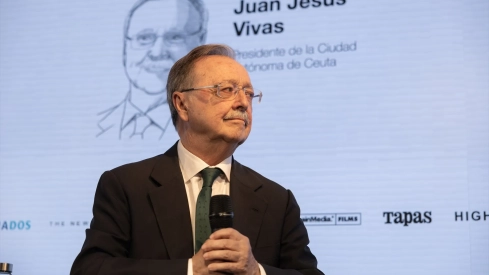
The judge of the Audiencia Nacional, María Tardón, who is investigating the massive entry into Ceuta of people from Morocco at the end of July, will hear this Wednesday as a witness the president of the autonomous city, Juan Jesús Vivas.
The Ceuta president had already stated in several television interviews that he intends to report to the court all the calls and alerts he sent to the central government in the days leading up to the events, in an appearance in which, he insisted, he intends to detail the sequence of warnings transferred from the autonomous city.
Vivas stated that he is the first interested in knowing who is behind what he described as an "aggression against territorial integrity", although he was convinced that Morocco is responsible, considering it unthinkable that the authorities of the neighboring country were unaware of the displacement of thousands of people towards the border.
The investigation points to a facilitating action from Morocco
Upon taking on the case, María Tardón pointed to a possible "permissiveness" and a "clear and undeniable facilitating management of the process from the territory of the Kingdom of Morocco", which, she noted, "is evidenced through the verified and graphically contrasted behavior of the Moroccan Security Forces".
The magistrate agreed to these witness statements a week after admitting Ceuta's appearance as a private prosecution in the process, understanding that the autonomous city was "a direct and immediate victim" of the "serious events" that occurred at the Tarajal border, which caused the death of at least 83 people in their attempt to reach Spanish territory.
The CENIF report attributes active guidance to Moroccan forces
In a report commissioned by María Tardón, the National Immigration and Borders Center (CENIF) of the National Police attributed to the Moroccan Security Forces and Corps "the active guidance of the crowd towards the crossing points" during the massive entry of people, and maintained that there was "planning" both "prior" and "tactical".
CENIF also warned that what happened was not "incidental", "occasional" or "spontaneous", and pointed to the existence of "a previous intellectual authorship and another material one" related to "monitoring and control functions".
In this regard, the Police stressed that there were uniformed Moroccan officers who would have given "indications to the people who irregularly crossed the border to overcome obstacles" and would have "organized access to the area for heavy tonnage vehicles with a large number of immigrants".
The report also highlighted the presence of non-uniformed "dynamizing agents", of "strong or athletic build" and with behavior that, according to the document, "does not fit with the dynamic behavior of the mass that enters and leaves Spanish territory".
Gonzalo Sanz and the resignation of Miguel Ángel Pérez Triano
One day after Juan Jesús Vivas's statement, the judge plans to hear Gonzalo Sanz, former chief of staff of the Government Delegation, who resigned weeks ago after it became known that he received messages from the National Intelligence Center (CNI) via WhatsApp and that he had an eleven-minute phone conversation with an intelligence service agent on July 29, one day before the events.
The statement will take place after this Monday the now former government delegate in Ceuta, Miguel Ángel Pérez Triano, presented his resignation after declaring that he is leaving politics because his family "does not deserve this pressure".
Add ElConstitucional.es as a preferred Google source for free.
Stay informed about all the latest breaking news with the best information. Against disinformation, for democracy and social rights.
