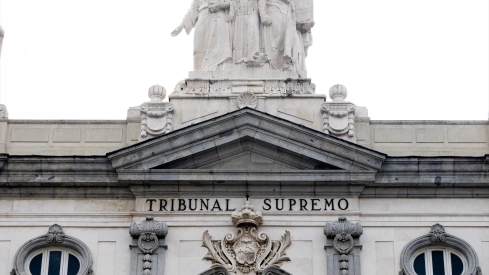
The Supreme Court has rejected extending the suspension of the right to vote to Spaniards who obtained nationality through the 'grandchildren's law' and reside in Spain, as well as to their children. The Contentious-Administrative Chamber considers that this request falls outside the scope of the appeal it is examining regarding registrations in the electoral census of residents abroad.
The high court will study a second request from the Iustitia Europa party, which asks to extend the suspension to adult sons and daughters of people naturalized by this route and registered in the foreign census. For now, the Supreme Court has ruled out adopting this urgent measure and has given the parties three days to present allegations before deciding.
The two provisions clarify the scope of a controversy that affects the right to vote of thousands of Spaniards less than a month before the general elections on November 29. Residents in Spain mentioned in the petition maintain their right to vote, provided they meet the general requirements, such as being of legal age and appearing in the census applicable to the elections.
On the other hand, for a part of the naturalized residents abroad, the precautionary suspension agreed by the Supreme Court in September and confirmed in October remains in force. The children affected by the new petition can vote for now, as the court has not yet decided whether to extend the measure to that group.
What the Supreme Court has now decided
Iustitia Europa asked the court to extend the suspension to those who obtained nationality under the 'grandchildren's law' and then established their domicile in Spain, as well as to their descendants. The Chamber has responded that it will not resolve this petition because it refers to matters unrelated to the object of the appeal.
The resolution does not imply a new authorization to vote, since the previous precautionary measure focused on the Electoral Census of Absent Residents, known as CERA, which gathers Spaniards living abroad. Residents in Spain appear in another electoral census.
After the Supreme Court's response, Iustitia Europa has submitted a letter to the Central Electoral Board to request that the people included in that request be identified and reviewed.
In a separate ruling, the Chamber has addressed the petition regarding the adult children of individuals who previously obtained nationality under the memory regulations. The court has refused to suspend their vote through urgent means and without first hearing the parties, as requested by Iustitia Europa, but will process the petition as a precautionary measure.
The request refers to individuals naturalized through the so-called annex III, one of the avenues provided for adult children. According to the data presented in the procedure, there are 189,678 registrations linked to this assumption. This figure does not equate to the number of people who would lose their vote if the petition were accepted. It also includes descendants of beneficiaries of the Historical Memory Law of 2007 and, according to available information, it is not determined how many are children of people affected by the suspension nor how many are listed in the foreign census.
The suspension that remains in force for part of the foreign vote
The so-called 'grandchildren's law' is part of the Democratic Memory Law of 2022 and opened different avenues for descendants of Spaniards to access nationality. The litigation before the Supreme Court focuses on the application of a subsequent instruction from the Ministry of Justice and its effects on the census of residents abroad.
The far-right Vox and Iustitia Europa appealed this application. The Government defends the legality of the procedure, while the Supreme Court agreed on September 10 to a precautionary suspension of certain electoral effects, noting a risk to the guarantees of the process. The court maintained the measure on October 12, once the elections were called.
The suspension does not affect all individuals who have obtained nationality under the 'grandchildren's law'. Among those in the group affected by the measure, the court allows those whose status as children or grandchildren of exiles is accredited by the corresponding consular certificate to vote.
The Government delivered to the Supreme Court this Wednesday a nominal list of 163,355 people naturalized through the examined route. According to the data provided by Foreign Affairs, 901 had accredited their status as descendants of exiles under the terms required by the court. The list of naturalized individuals and the number of voters ultimately affected by the measure are not necessarily identical figures, as their registration and census situation must be taken into account.
The decision has provoked an intense debate about the right to vote for Spaniards abroad. The Ombudsman, Ángel Gabilondo, appealed to the Constitutional Court against the suspension, but on October 21, the court of guarantees dismissed his appeal for being premature, without resolving the merits of the conflict.
The Supreme Court keeps the main procedure regarding the instruction of the Ministry of Justice open. Its final decision is pending, as is the response to the new request to extend the precautionary measure to adult children registered in the foreign census.
