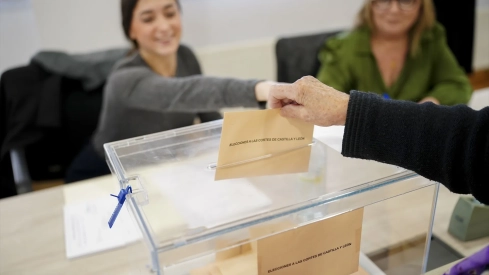
The Supreme Court has decided to intervene in the electoral application of the well-known grandchildren's law and has agreed to provisionally suspend the effects of registrations in the Electoral Census of Absent Residents (CERA) linked to this route of access to nationality. The measure will remain in force while the court studies the merits of the appeals filed against the application of the norm and affects those who cannot prove to the consulates that they are descendants of Spaniards who suffered exile.
The so-called grandchildren's law is part of Law 20/2022, on Democratic Memory, and opened a path for certain descendants of Spaniards to obtain Spanish nationality of origin. The provision is designed to repair the consequences of the exile caused by the Civil War and the dictatorship and contemplates, among other cases, descendants of people who left Spain for political, ideological, religious reasons or reasons related to their sexual orientation or identity. The norm establishes as a reference the period between July 18, 1936, and December 28, 1978.
Vox and Iustitia Europa brought the conflict before the Supreme Court
The decision of the high court comes after the appeals filed by Vox and Iustitia Europa, which requested precautionary measures to prevent further registrations in the CERA while the litigation is resolved. Both parties questioned the way in which the regulations were being applied and focused on the consequences it could have on the electoral census.
The origin of the procedure is found in an agreement of the Central Electoral Board of last July 16. The JEC then refused to paralyze the preparation of the census, considering that the electoral administration should continue to apply the established procedures while they remained in force. At the same time, the body requested information from the Electoral Census Office on the application of the grandchildren's law.
The Supreme Court has provisionally agreed to "provisionally block the effects of the interpretation of the Law made by the former director general of Legal Security Sofía Puente," pending resolution of the merits of the matter.
The decision comes after the Prosecutor's Office and the State Attorney's Office argued before the Supreme Court that these citizens' access to voting should not be suspended. The Government argued that registration in the CERA is a consequence of having legally acquired nationality and warned that preventing it would affect the fundamental right to suffrage.
With this resolution, the Supreme Court does not yet resolve whether the interpretation of the regulations is correct, but rather establishes a provisional measure while analyzing the appeals. The central question now is to determine which beneficiaries effectively meet the conditions provided by the Democratic Memory Law and, in particular, who can prove their status as descendants of exiles.
