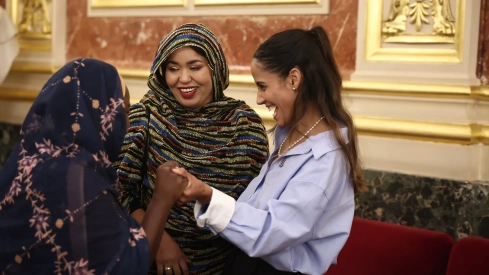
The Congress of Deputies has broadly backed this Thursday the bill to grant Spanish nationality to Sahrawis born when Western Sahara was under Spanish administration. The initiative, promoted by Sumar and finally agreed upon with the PSOE, will now continue its processing in the Senate.
The vote comes at one of the most sensitive moments in relations with Morocco, after the entry of more than 70,000 people into Ceuta at the end of July and the publication of the reports that question the initial response of the Moroccan authorities. Rabat also claims sovereignty over all of Western Sahara and views with suspicion a law that recognizes a distinct identity for those born in the former Spanish colony.
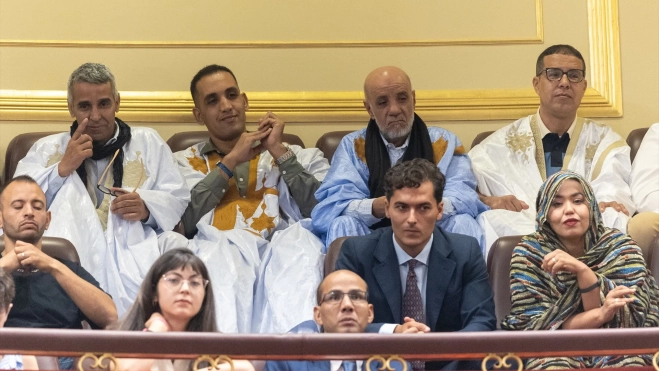
From the guest tribune, representatives of the Sahrawi people have followed a debate that puts an end to decades of waiting for thousands of families. Estimates of potential beneficiaries vary due to the dispersion of the population between the territories occupied by Morocco, the Tindouf refugee camps, and the European diaspora. Parliamentary calculations speak of around 80,000 people, while Sahrawi organizations raise the figure to include descendants.
The norm considers that "exceptional circumstances" exist to grant nationality by naturalization to those born in Western Sahara before September 29, 1977, even if they lack legal residence in Spain. They can prove their origin with an expired Spanish DNI, birth certificates, documents issued by the Spanish Administration, or registration in the United Nations census for the Sahrawi referendum.
Applications will be free and can be submitted within three years after the law comes into force, with the possibility of extending the deadline for another year. First-degree descendants will have five years to opt for nationality, while the reform of the Civil Code will also allow Sahrawis to apply for it after two years of legal residence in Spain.
Deputy Tesh Sidi demands the return of the Spanish DNI
The Más Madrid deputy integrated into Sumar Tesh Sidi, born in a Sahrawi refugee camp and one of the main promoters of the law, has led the defense of an initiative that began to make its way in Congress during the previous legislature. Sidi has defined its approval as a "collective achievement" that belongs to an entire people and has avoided attributing it to a specific party or government.
The parliamentarian has resorted to the film 'The Terminal' to describe the "legal and juridical limbo" suffered by the Sahrawis for five decades. Its protagonist is trapped in an airport after his country disappears and his passport loses validity, a situation with which Sidi has compared the loss of Spanish documentation suffered by thousands of people after Spain's departure from the territory.
"Today the Spanish DNI is returned to those Sahrawis who once had it and this State took it away from them," she defended. The deputy has presented the law as an act of "good politics" and historical reparation and has asked the parties to abandon any calculation conditioned by Morocco's reaction.
Hoy, al pueblo saharaui no le vale una abstención. Exige valentía. pic.twitter.com/gIx0IlmxT4
— Tesh Sidi🇪🇭 (@teshsidi) September 10, 2026
Sidi has also addressed her message to the Popular Party, which shares the need to facilitate the naturalization of Sahrawis but has opted for abstention due to disagreement with the procedure. "An abstention or a vote against is being on the side of Morocco," the deputy warned.
The PSOE has completed a decisive change of position in recent months so that the law could go ahead. The socialists initially rejected its admission for processing and kept the proposal blocked until June, when they agreed on the text with Sumar and the other parliamentary allies. Socialist deputy Artemi Rallo has described the day as "historic" and has argued that Congress was restoring a snatched right.
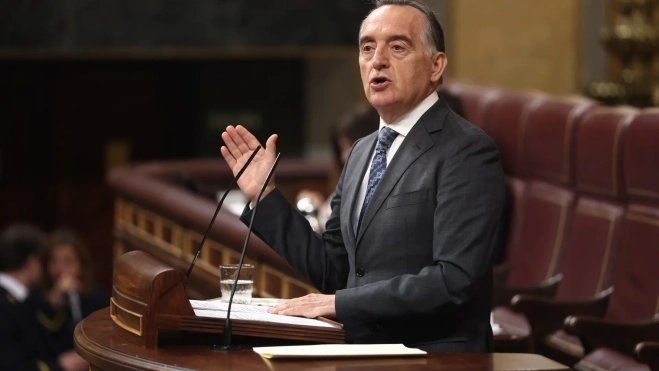
"This is an act of sovereignty of a democratic, free Parliament, without subservience or complexes," Rallo proclaimed. The socialist representative has maintained that the norm responds to a "just cause" and has accused Vox of positioning itself against the dignity of the Sahrawi people.
The text has also received the backing of ERC, EH Bildu, Podemos, the PNV, Compromís and the BNG, although these formations have recalled that nationality constitutes a partial reparation and leaves pending the right to self-determination of Western Sahara. PNV deputy Mikel Legarda has spoken of a "deep moral debt," while Jon Iñarritu, of EH Bildu, has demanded that the Government rectify its policy towards Rabat.
An uncomfortable decision for Morocco
The diplomatic scope of the vote is especially relevant after the shift adopted by the President of the Government, Pedro Sánchez, in March 2022. Spain then began to consider the Moroccan autonomy plan for the Sahara as the "most serious, credible and realistic" proposal, breaking with its previous position and causing the rejection of the Polisario Front and a serious crisis with Algeria.
The law approved by Congress keeps that diplomatic position intact and also does not resolve the pending decolonization process. Its immediate effect is concentrated on the individual rights of Sahrawis, who will be able to obtain a Spanish passport, study and work in the European Union, circulate in the Schengen area and access public services in Spain.
The political dimension is difficult to separate from the context. Morocco officially remains silent, but media close to the Government of Rabat have shown their concern about a norm that can recognize tens of thousands of inhabitants of Western Sahara as Spanish and reinforce a differentiated Sahrawi identity within the territory controlled by Morocco.
The vote has also occurred a few days after the Ceuta crisis and after documents declassified by the Government reflected the lack of proactive reaction from Moroccan forces during the first hours of July 30. Sumar and several parliamentary partners have since demanded a review of the relationship with Rabat and to stop subordinating Spanish policy on the Sahara to migratory cooperation.
The PP has defended that Sahrawis can access nationality after two years of legal residence, the same path provided for citizens of Ibero-American countries, Andorra, the Philippines, Equatorial Guinea and Portugal. Its deputy Pedro Muñoz Abrines has alleged reasons of legal certainty to reject the letter of naturalization and has again asked for explanations for the change of the PSOE both in this law and in its policy on Morocco.
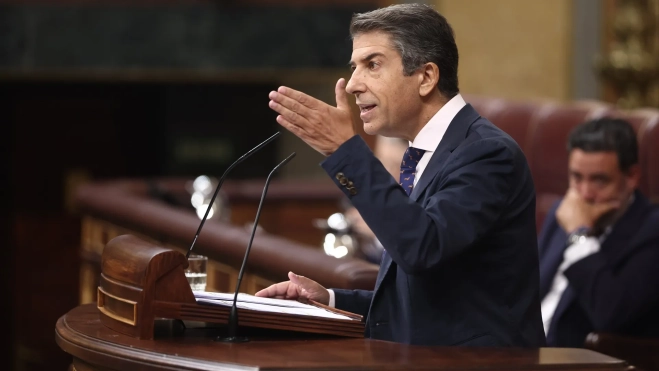
The far-right Vox has been the only force to announce its frontal rejection. Its deputy Ignacio Hoces has questioned the documentation foreseen to accredit Sahrawi origin and has assured that "Spanish nationality cannot be an indemnity today for yesterday's history". Santiago Abascal's party has demanded more controls, despite admitting the existence of a historical injustice.
The Polisario Front has favorably received any measure that improves the lives of the Sahrawi population, although its leader Brahim Ghali has warned that Spanish nationality should not overshadow the demand for self-determination and independence. The text will now go to the Senate and will come into force four months after its definitive publication in the Official State Gazette.
Add ElConstitucional.es as a preferred Google source for free.
Stay informed about all the latest breaking news with the best information. Against disinformation, for democracy and social rights.
