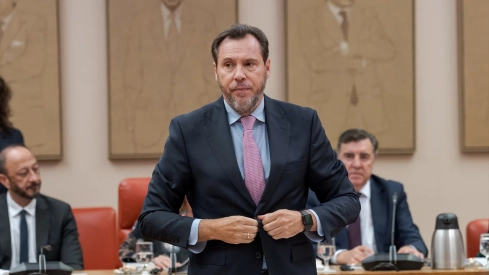
The resignation of Óscar Puente opens a new stage in the railway crisis and forces the PSOE to face the decisive stretch towards the November 29 elections without one of its most prominent leaders. Pedro Sánchez has responded by vindicating the dignity of his departure and thanking him for his work. The PP has made it clear that it will maintain pressure on the president, while the left-wing forces that demanded the resignation now place the demand on the necessary measures to restore confidence in the train.
Spain wakes up this Wednesday with a political responsibility assumed and many answers still pending. Puente announced his resignation at the end of a voluntary appearance of more than four hours before the Permanent Deputation of Congress. He also announced that he is renouncing to run on the socialist lists, in which he headed the Valladolid candidacy. His decision comes a week after the Urda accident, where 69 people died, and after the Adamuz tragedy last January.
Sánchez wanted to accompany that farewell with public recognition. In his message on X, the president attributed the resignation to the minister's will and respect for the victims and for the progressive project. "Politicians like him dignify our country," he wrote, before closing with a personal thank you. "Thanks for so much, comrade."
Óscar Puente ha dado la cara, ha dado soluciones y, después, ha dado un paso al lado.
— Pedro Sánchez (@sanchezcastejon) November 3, 2026
Por dignidad. Por voluntad propia. Por respeto a las víctimas y al proyecto progresista.
Políticos como él dignifican a nuestro país y nos demuestran que no todos somos iguales. Mientras unos…
The departure changes the scenario for the socialists, who until Tuesday had defended the minister's continuity. According to 'ElConstitucional.es' from internal sources, the trackings handled by the PSOE do not offer good prospects after the train accident in Urda. This information allows us to understand the concern with which the party faces the coming weeks, although by itself it does not prove that the polls explain Puente's decision.
A resignation that also affects 29N
Puente defended upon his farewell that political responsibility should be assumed even without having directly intervened in the causes of the accidents. A minister, he maintained, "cannot continue in his position with two accidents of this severity in less than a year". As he explained, he had made the decision in the first moments after the tragedy and had communicated it to his family.
He justified having waited until the parliamentary appearance due to the need to first attend to the most urgent tasks. Among them, assisting those affected, gathering information about what happened, and approving the first assistance and safety measures. He defined his departure as a matter of "political dignity, coherence, and empathy with the victims".
The announcement was received with applause from socialist deputies and some representatives of the Broad Front. Gabriel Rufián, spokesperson for Esquerra Republicana de Catalunya (ERC), approached the minister at the end. EFE reports that, during that exchange captured by the Congress signal, he whispered to him that he had been a great minister.
The scene came after a demanding intervention by Rufián himself, who had questioned the railway model and demanded accountability without explicitly asking for a resignation. Upon leaving, he insisted that the fundamental issue remained the safety of travelers. His personal recognition of Puente thus coexisted with a political criticism that the resignation leaves unanswered.
The minister also dedicated his farewell to Sánchez, his team, the socialist militants, and his family. He defended the strength of the State and public services against the discourse of those who present Spain as a failed country. His warning about the right-wing alternative was summarized in one sentence. "Public services are never strengthened with cuts."
VIDEO | El hasta este martes ministro de Transportes y Movilidad Sostenible, Óscar Puente, ha anunciado su dimisión y también ha renunciado a formar parte de las listas del próximo 29 de noviembre, porque un ministro de Transportes "no puede continuar con dos accidentes de esta… pic.twitter.com/2E7giVcIyH
— EFE Noticias (@EFEnoticias) November 3, 2026
The alternative left recognizes the gesture and demands measures
Ada Colau, Broad Front candidate for the Presidency of the Government and one of the leaders who had called for his departure, thanked the "dignity of this difficult gesture". The former mayor of Barcelona suggested that the next step should be to regain trust through agreements, funding, and defense of public service.
This recognition has political scope within a left that had hardened its criticism of the minister in recent days. It allows for an appreciation of Puente taking responsibility and, at the same time, maintaining demands regarding the network's operation. The discussion remains open on issues such as maintenance, working conditions, and guarantees when automatic systems fail.
Quiero agradecer a Óscar Puente la dignidad de este gesto difícil. Estoy segura que es un paso adelante para recuperar la confianza en el tren que nuestro país merece.
— Ada Colau 💜🌈🔻 (@AdaColau) November 3, 2026
Ahora nos toca avanzar en acuerdos y medidas. Pacto de Estado, financiación y servicio público.
The Minister of Health, Mónica García, also highlighted that Puente had offered explanations before announcing her resignation. She described it as an "honorable gesture" and linked it to political dignity and empathy towards the victims. From the Ministry itself, the Secretary of State for Transport, José Antonio Santano, expressed his pride in having worked alongside her.
Dimite Óscar Puente dando la cara y dando todas las explicaciones que se le pueden exigir a un ministro en estas circunstancias.
— Mónica García (@Monica_Garcia_G) November 3, 2026
Un gesto honroso que pone los estándares de la política en la dignidad y la empatía con las víctimas.
No, no todos los políticos somos iguales. Un…
Irene Montero focused on the direction taken by whoever assumes Transport. In statements to Cadena SER after the resignation was announced, the Podemos candidate maintained that the departure responded to a "great social consensus" and demanded to recover public control of areas such as railway maintenance and security.
Podemos thus maintains a proposal that goes beyond the ministerial reshuffle. Its criticism of liberalization is part of a dispute with the PSOE on how to manage public services and what changes to offer to the progressive electorate. Linking a specific reform with accident prevention also requires knowing the conclusions of the technical and judicial investigation, which remains open.
The PP maintains pressure on Sánchez
The PP has responded to the resignation by questioning Puente's motives and immediately shifting the pressure to Pedro Sánchez. In an assessment distributed to the media, sources from the popular leadership attribute the resignation to the PSOE's electoral deterioration. "He didn't resign. Tezanos resigned him. He's not leaving for the victims or for dignity, but for the polls," they maintain.
The reference to the president of the Center for Sociological Research seeks to present the departure as an electoral calculation operation. This is an accusation by the PP, which does not provide evidence in that statement of an intervention by José Félix Tezanos in the decision. The existence of unfavorable internal trackings for the socialists, according to sources consulted by 'ElConstitucional.es', also does not allow to establish by itself what determined the minister's resignation.
The popular party makes it clear that they will maintain their offensive against the president. "Responsibility is not delegated and Pedro Sánchez cannot hide behind Óscar Puente," say these sources, who reproach him for having entrusted infrastructure first to José Luis Ábalos and then to Puente. Their conclusion links directly to the general elections. "His responsibility has not yet been cleared, but we will resign him at the polls."
La dimisión de Puente era imprescindible, pero no suficiente. Sánchez es el responsable de haber nombrado como ministros de Transportes a Ábalos, hoy en la cárcel, y a Puente, un tuitero pendenciero al que mantuvo después de la tragedia de Adamuz.
— Miguel Tellado (@Mtelladof) November 3, 2026
El 29N les dimitiremos a…
That message expands on the public reaction of Miguel Tellado, who had described the resignation as "essential, but not enough". The PP demands that what happened be clarified and that responsibilities be assumed at the highest level. "The crisis will close when there are sufficient explanations, complete responsibilities, and guarantees that it will not happen again," states the assessment sent by the party.
The response confirms that the change in Transport opens a different phase of the political confrontation. The PSOE loses the daily controversy over Puente's continuity, but the right maintains its pointing at Sánchez and will take the government's overall railway management to the campaign. For the socialists, regaining the initiative will require explaining who will execute the announced measures, how security will be reinforced, and what response victims and their families will receive.
