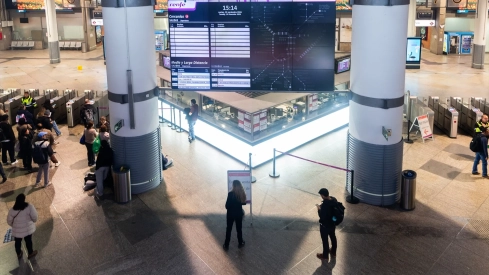
The train drivers' strike called by the Spanish Railway Drivers' Union (Semaf) has caused significant disruptions to Renfe train services this Tuesday, especially in the Cercanías services in Madrid and Rodalies in Catalonia. The company warned from early morning that the service would be "very affected" and recommended users to seek alternative means of transport due to difficulties in guaranteeing usual frequencies.
The 24-hour strike day has left numerous lines practically paralyzed and caused crowds at stations and other means of transport. According to data provided by Renfe at the close of the afternoon, adherence to the strike among personnel capable of joining it reached 33.2%, while the union maintains that support among train drivers has been close to 100%. The biggest incidents have been recorded in Madrid, where several Cercanías lines stopped running for much of the day. In Barcelona, Rodalies also suffered significant disruptions and reported that the established minimum services were not being met.
The protest comes after Semaf denounced the breach of commitments reached with the Ministry of Transport to improve railway safety, reinforce infrastructure maintenance, and increase staff numbers. However, the new commitments announced by the Executive have opened a path to resume negotiations and have led the union to modify part of its mobilization calendar.
Madrid and Barcelona, the main points affected by the Renfe strike
The Community of Madrid has been one of the territories most affected by the strike day. According to Renfe's balance, 91.9% of the trains planned within the minimum Cercanías services have been canceled, while another 2.38% did not depart. The company estimates that around 512,000 passengers have been affected by incidents on the Madrid network.
Among the most affected lines are the C-2, C-3, C-4, and C-5, which have remained blocked for a good part of the day. Problems have also been reported on the C-1, while on lines C-7, C-8, and C-10, only a few trains have run sporadically. The situation has led to an increase in users of other means of transport, such as the Metro, urban and interurban buses, and roads. The rain recorded during the day has further complicated travel in the capital.
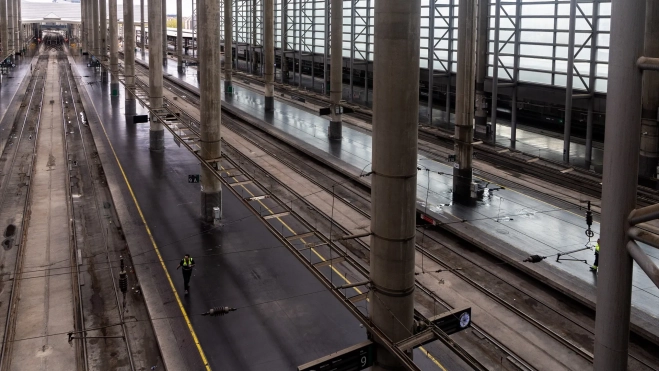
In Catalonia, Rodalies has also suffered significant disruptions. Renfe has estimated that 40% of the planned frequencies within the minimum services did not run in Barcelona. This situation has added to the mobility difficulties faced by the Catalan railway network. The impact has not been limited to Cercanías trains. In Renfe's public services, which include Cercanías, Rodalies, Avant, and Media Distancia, the company has recorded 55.38% of minimum services suppressed. In high-speed and long-distance services, cancellations have reached 44.5% of scheduled minimum services, affecting 9,234 passengers.
Given the incidents, Renfe has reminded passengers with affected trains that they can make changes and cancellations to their reservations without additional cost. The operator has also sent notices to users via SMS and email with the data associated with their tickets.
Semaf postpones Thursday's strike after new government commitments
Tuesday's call is part of a conflict that has been dragging on for months between train drivers and the Ministry of Transport. Semaf demands that the agreements reached last February be fulfilled to reinforce railway safety, improve track maintenance, and increase the human resources of the agencies responsible for the network.
Among their main demands are new circulation protocols in the face of meteorological alerts, better coordination between control centers and trains in risk situations, as well as improvements in driving conditions and greater spending allocated to maintaining infrastructure. The conflict has intensified after the serious railway accidents in Adamuz and Urda, which have once again placed the safety of the railway system at the center of the debate. The union believes that the measures agreed upon so far have not been implemented with the necessary speed and demands concrete commitments from the Administration.
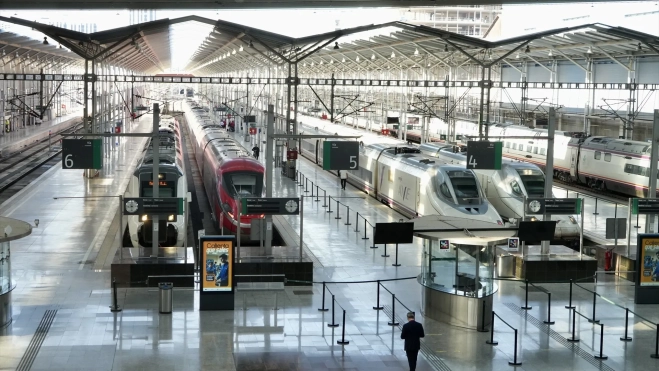
However, the Government announced this Tuesday new measures in the Council of Ministers to reinforce railway safety. These include strengthening the inspection functions of the State Railway Safety Agency and the possibility for train drivers to stop a train when they detect a risk situation on the tracks. After evaluating these announcements, Semaf has decided to postpone the strike planned for Thursday, November 12, and move it to the 23rd. The union explained that it wants to allow room for negotiation and verify that the Executive's commitments are published in the Official State Gazette.
However, the decision does not mean the end of the conflict. Semaf maintains the strike call for November 17, aimed at the entire railway sector, and keeps pressure on the Government to fulfill pending agreements. Therefore, although travelers will not have to face the train drivers' strike initially planned for this Thursday, the possibility of new mobilizations remains on the table.
Contact
We are listening. Get in touch.
