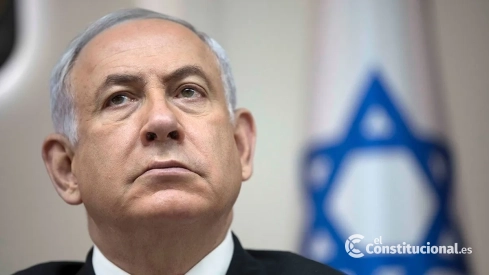
The legislative elections held in Israel on October 27 have opened a new stage of political uncertainty. The acting prime minister, Benjamin Netanyahu, has once again positioned his party, Likud, as the most voted force, but the bloc that supports his government has not achieved the necessary seats to maintain a parliamentary majority. In this scenario, the Arab parties have achieved historical representation and could prove decisive in facilitating an alternative to the current Executive.
The situation has become complicated after Likud denounced alleged irregularities in the voting and possible foreign interference to favor Arab parties. The Central Election Commission has asked Shin Bet, the Israeli internal intelligence service, to investigate the suspicions. However, the Police have assured that there is no evidence to support the accusations of fraud and have described election day as a process with few incidents affecting its integrity.
The opposition believes that Netanyahu is using these complaints to cast doubt on the election results and hinder the formation of an alternative government. The confrontation comes at a key moment, when the different political forces must negotiate possible alliances to achieve the necessary majority in the Knesset, the Israeli Parliament.
Netanyahu wins the elections, but does not get the seats to govern with a majority
The elections on October 27 were held after three years marked by the war in Gaza, the extension of the conflict to other regional fronts, and the political crisis derived from the Hamas attacks of October 7, 2023. Security management, military policy, and the future of the Palestinian territories have been among the central issues of the electoral debate.
Netanyahu, who has played a central role in Israeli politics for decades, led a coalition formed by right-wing, far-right, and ultra-Orthodox parties. His government has advocated a strong security policy, while his more radical partners have supported the expansion of settlements in the West Bank and a position against concessions to the Palestinians. Likud has obtained 27 seats, according to provisional results published after the count. However, Netanyahu's bloc has fallen short of the 61 deputies needed to achieve a majority in a 120-member Parliament. The opposition bloc led by former military chief Gadi Eisenkot has secured 48 seats, but it also does not have enough support on its own to form a government.
The main novelty of these elections has been the result of the Arab parties, which have achieved a historic joint representation of around 19 seats. The Joint List, made up of left-wing parties and pro-Palestinian orientation, has achieved 11 deputies, while Ra'am, led by Mansour Abbas, has also strengthened its parliamentary presence. These parties could become a decisive piece for the opposition to try to displace Netanyahu from power. However, the possibility of an agreement is conditioned by the ideological differences between the opposition parties and by the rejection that several Jewish parties have expressed during the campaign to pact with the Arab lists.
The leader of The Democrats, Yair Golan, has shown himself in favor of opening talks with these parties. For his part, the leader of the Joint List, Yousef Jabareen, has advocated on the social network X a "real and egalitarian Jewish-Arab partnership" and has assured that they are prepared to contribute to a change of government. The result thus leaves two scenarios open: that Netanyahu manages to gather support to stay in power or that Eisenkot manages to articulate an alternative majority with the backing of other forces. Parliamentary arithmetic, however, does not by itself guarantee that either option can prosper.
Likud denounces alleged foreign interference and the opposition accuses Netanyahu of discrediting the polls
After learning the results, the Likud has filed complaints about alleged irregularities that, according to their version, would have benefited the Arab parties. The party has maintained that there were possible illegal practices related to voter mobilization and has asked for an investigation into eventual foreign funding. Suspicions include possible Qatari funding linked to Ra'am, although no conclusive evidence has been publicly presented to demonstrate that the election result was altered. Qatar has denied any intervention and has called the accusations "ridiculous" and "dangerous". Mansour Abbas's party has also denied any connection to the alleged irregularities and has assured that it will cooperate with the authorities to clarify the facts.
The president of the Central Elections Committee, Noam Sohlberg, has asked the head of the Shin Bet, David Zini, to investigate the complaints. In his letter, he acknowledged that he cannot confirm the basis of the suspicions, but considered it necessary to examine them because they involve possible foreign actors. The request for an investigation does not mean that fraud has been proven or that the results have been annulled. In fact, the Israeli Police have ruled out the existence of evidence to support the Likud's accusations and have indicated that election day proceeded with few incidents relevant to the integrity of the process.
The opposition has responded with harsh criticism. Gadi Eisenkot has accused Netanyahu of using unverified information to question the results and has warned that the acting prime minister is trying to influence public perception of the count. Yair Golan, for his part, has denounced a campaign aimed at delegitimizing the will of the voters, especially that of the Arab population. The debate has also reached social media. Yusef Jabareen has defended on X political cooperation between Jews and Arabs as an alternative to the current government. Alon-Lee Green, co-founder of the Standing Together movement, has also celebrated the result of the Arab lists and has raised the question of whether opposition leaders will be willing to form a government with their support.
While the electoral process is completed and investigations advance, the main unknown remains who will manage to gather the necessary support to govern. Netanyahu maintains the advantage of having led the most voted force, but his bloc lacks a majority; the opposition, for its part, needs to overcome its internal differences and decide if it is willing to count on the Arab parties to form an alternative Executive.
