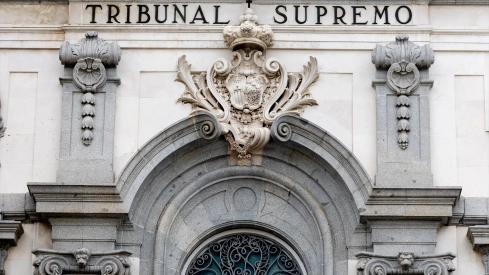
The right to vote of more than 163,000 Spaniards descended from emigrants and exiles remains in the air after the Supreme Court maintained the precautionary suspension of their participation in the general elections on November 29. The measure came after appeals filed by Vox and Iustitia Europa, which question the way in which some of the citizens who obtained nationality through the so-called 'grandchildren's law' were incorporated into the electoral roll.
Now, 69 affected people and three associations have managed to appear in the judicial procedure to defend their rights. These are the Association of Foreigners in Network, the Center for Descendants of United Spaniards (Cedeu) and the Andalusian Association for Human Rights. The Supreme Court has admitted their requests and has opened a new three-day period for them to present allegations on the merits of the case. The decision comes after the high court suspended on September 10 the right to vote of those naturalized by this route who reside abroad and are registered in the Electoral Roll of Absent Residents (CERA), except for those who can prove that they are descendants of exiles for political, ideological or belief reasons, among other assumptions included in the resolution.
The measure affects 163,355 people, according to the latest data submitted by the Government to the court. Of these, only 901 have managed to prove through a consular certificate that they meet the conditions required by the Supreme Court to be able to vote on 29N.
Vox and Iustitia Europa question naturalizations and seek to expand restrictions
The origin of the procedure lies in the appeals filed by Vox and Iustitia Europa against an agreement of the Central Electoral Board (JEC). Both parties question the Administration's actions in registering Spaniards who obtained nationality through the Democratic Memory Law and the subsequent instructions that developed its application. The so-called grandchildren's law allowed descendants of Spaniards who had to leave the country, including those who suffered exile during the Civil War and the Franco dictatorship, to apply for Spanish nationality. The judicial conflict focuses on how this norm has been applied and on the interpretation of the requirements to prove the status of exile.
Vox and Iustitia Europa argue that it is necessary to review certain entries in the census of residents abroad. Following their appeals, the Supreme Court agreed to provisionally suspend the vote of a portion of naturalized citizens while it studies the procedure. The court argues that the correctness of the electoral roll must be guaranteed and possible irregularities avoided. But the consequences of this decision go beyond an administrative discussion: thousands of people who have already obtained Spanish nationality have been left unable to exercise their right to vote in the upcoming general elections. The Public Prosecutor's Office and the State Attorney's Office opposed the suspension and demanded that the measure be revoked, considering that it affects a fundamental right and that there was no time to review the census before the elections.
Furthermore, Iustitia Europa has tried to broaden the scope of the restrictions. The party asked the Supreme Court to extend the suspension also to the sons and daughters of people who obtained nationality through this route, a group that, according to the data provided in the procedure, includes about 190,000 entries. It also requested to review the situation of naturalized citizens living in Spain. However, on October 30, the Supreme Court rejected provisionally suspending the vote of the latter, considering that this request was not part of the object of the appeal.
Those affected denounce that they are prevented from voting without having been able to defend themselves
The appearance of the 69 individuals and the three associations opens a new phase in the procedure. Those affected will be able to present their arguments against the appeals of Vox and Iustitia Europa and question the suspension that prevents them from participating in the November 29 elections. Among the allegations presented by lawyers José Antonio Martín Pallín and Eduardo Ranz is the lack of legitimacy of the plaintiff parties to appeal a matter that directly affects the fundamental right to vote of thousands of citizens. The lawyers consider that Vox and Iustitia Europa do not have the capacity to act on behalf of those affected or to denounce an alleged violation of rights that they are not responsible for defending.
They also argue that the Supreme Court has overstepped its bounds by evaluating an administrative instruction from 2022 that had not been directly appealed, and warn that maintaining the suspension during the elections will cause harm that will later be impossible to repair. Even if the court ultimately rules in favor of those affected, they will have already lost the opportunity to vote on November 29. The controversy has also generated criticism among associations of judges and prosecutors. Judges and Judges for Democracy and the Progressive Union of Prosecutors described the suspension as disproportionate and warned that people with Spanish nationality recognized through legal procedures have been deprived of suffrage, without an individualized examination of each case.
While the Supreme Court continues to study the appeals, thousands of descendants of Spaniards who recovered their nationality thanks to the Democratic Memory Law still do not know if they will be able to participate in the upcoming elections. A controversy that once again places at the center of the debate the scope of the political rights of naturalized citizens and the use of judicial procedures to question their registration in the census.
