The migratory crisis in Ceuta after the massive entry of migrants on July 30 and 31 has led the Government to declare the situation of interest for National Security. The objective, as stated in Royal Decree 681/2026, of August 25, published in the Official State Gazette (BOE), is to reinforce coordination among the different administrations in the face of a situation that has strained border control capacities, humanitarian assistance, reception, child protection, and security, in addition to affecting the ordinary functioning of public services.
The declaration will be in force until December 31, 2026, although the President of the Government, after a report from the National Security Council, may agree before that date to extend it, modify its material or geographical scope, or terminate it early. The scope of application includes the territory of Ceuta, its land border, border posts, coasts, ports, and adjacent waters in which Spain exercises sovereignty, jurisdiction, or powers.
Torres will assume Functional Authority
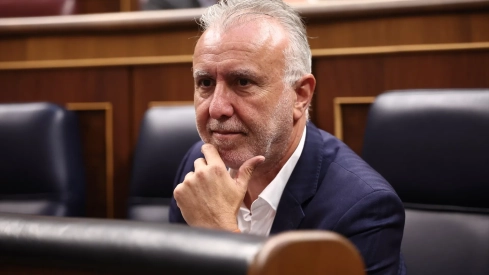
The main novelty of the device is the designation of the Minister of Territorial Policy and Democratic Memory, Ángel Víctor Torres, as Functional Authority to promote and manage in a coordinated manner the actions derived from the declaration. The royal decree attributes to him the capacity to direct and coordinate the resources contemplated in the norm and establish priorities for their use.
Among his functions will also be to set common objectives for the administrations and organizations involved, promote measures to preserve Ceuta's essential services, and integrate the different dimensions of the crisis: humanitarian, assistance, border, security, administrative, and foreign cooperation.
Torres must also coordinate the necessary logistical support in centers or facilities located in other parts of Spain, as well as possible international support. He will also have to keep the National Security Council permanently informed about the evolution of the situation and may promote the necessary actions for the return of irregular migrants, always in accordance with the legal system.
However, the royal decree makes it clear that the guidelines of the Functional Authority “will not alter the ownership of the powers” of the intervening authorities nor modify the organic relationships or legally established chains of command.
A committee with the presence of 17 departments and agencies
To manage the crisis, a coordination system is established, which will be headed by the National Security Council. In turn, the Situation Committee will assist this body and will be chaired by Torres, while the Secretariat will correspond to the Department of National Security.
In its reduced composition, representatives from numerous departments and agencies will participate, including Foreign Affairs, Presidency, Defense, Treasury, Interior, Health, Equality, Inclusion, Social Security and Migrations, Youth and Childhood, in addition to the Government of Ceuta and the Government Delegation in the city. The National Intelligence Center, the Secretary of State for Communication, the General State Attorney's Office, the Cabinet of the President of the Government, and other departments contemplated in the royal decree will also be represented.
In addition, a permanent Coordination Cell is activated to support the Functional Authority during the period of validity of the declaration. Support bodies in the area may depend on it to execute functional guidelines and ensure coordination between the different administrations.
More resources to face the crisis
The royal decree also contemplates the mobilization of capabilities and resources of the General State Administration and the City of Ceuta itself. These include Defense assets for human, logistical, health, transport, surveillance, infrastructure, accommodation, and communications tasks.
Interior will provide resources related to the control of land, sea, and air borders, citizen security, the maintenance of public order, immigration, identification and documentation, and the prevention and investigation of irregular immigration and illicit human trafficking.
Resources from Transport are also included for maritime, air, and land transport, ports, maritime rescue and safety; from Inclusion, Social Security and Migrations for reception and humanitarian assistance, temporary shelter, accommodation, and transfers; and from Youth and Childhood for the system of protection and care for minors.
In the case of the City of Ceuta, resources are incorporated for social and welfare services, child protection, Local Police, civil protection, firefighters, health services, and other essential services.
What facilities does the royal decree contemplate
The annexes also identify different infrastructures that can be used to address the situation. Among those dependent on the State are land belonging to the Ministry of Defense in Loma Margarita, La Hípica, the flour factory warehouse, and the old football field of the cavalry barracks, as well as land on the Guano esplanade and spaces in the Coronel Fiscer barracks.
Also contemplated is the IES Puertas del Campo indoor sports center, dependent on the Ministry of Education. On the part of the City of Ceuta, the ceded land in the Loma Colmenar buffer parking lot, the space of the old Military Hospital, and the sports centers of Santa Amelia, La Libertad, Antonio Campoamor, Guillermo Molina, and Díaz Flor appear.
The use of these resources will be subject to the principles of necessity, suitability, proportionality, efficiency, and temporality, among others.
Finally, the royal decree emphasizes that the declaration of interest for National Security does not imply the suspension of fundamental rights or public freedoms, nor does it allow for the adoption of measures typical of states of alarm, exception, or siege. Management must be carried out through the ordinary powers and means of the different administrations, which will be obliged to collaborate and provide the human and material resources under their dependence.
